
Amira Bach, Autumn Fisher, Rui Li, Dana Omar, Hiraj Patel, and Raafae Rasool, Chinook High School, Lethbridge, Alberta, Canada
Reviewed on 9 May 2026; Accepted on 22 June 2026; Published on 26 October 2026
With help from the 2026 BioTreks Production Team.
Each year, Alberta produces approximately 46,000 tonnes of oat agricultural byproducts, leading to residue that raises greenhouse gas emissions. A 2019 Canadian study also found that 110 Canadian hospitals produce up to 87,000 tons of medical waste annually, which ends up in landfills, with wound bandaging waste being a leading polluter. Current single-use wound bandaging leads to increased waste and can cause irritation and sometimes allergic reactions. We propose a biodegradable, antimicrobial wound dressing made from oat husk cellulose, a major agricultural byproduct in Alberta. By transforming waste into a valuable medical tool, we aim to reduce healthcare waste while creating a circular Albertan economy. We plan to engineer bacterium Bacillus subtilis to increase production of subtilin, a natural antimicrobial peptide that targets Gram-positive bacteria, one of the leading causes of wound infections. Our engineered circuit involves an inducible promoter, ribosome binding site, subtilin gene, and terminator in order to ensure efficient subtilin production. Unlike traditional gauze that acts only as a physical barrier, our solution actively inhibits bacterial growth without relying on harsh chemical disinfectants or PFAS-containing materials. We hope to model our plan using commercial cellulose, testing for antimicrobial effectiveness and shelf life stability. We aim to create a cost-effective, sustainable wound dressing that protects both human health and the environment.
Keywords: Oat, wound, subtilin, Bacillus subtilis
Authors are listed in alphabetical order. Megan Malach mentored the group. Please direct all correspondence to mailto:kefferwilkesl@uleth.ca.

Background
Gauze bandages and medical waste
Gauze waste is a big discussion in the medical field, especially the reduction of common bandage waste. In the United States, a study conducted states the US health care system is the second largest contributor of trash (Bravo, D., et al., 2022). This study focused on the amounts of waste in surgical supplies occurring in operating rooms, primarily in hand surgeries. The study was formed around the fact that approximately 20% to 70% of waste is produced by operating rooms, and very little of this waste is recycled. Our project, Oat Shield, aims to solve this problem through safe disposable biodegradable bandages, lowering bandage waste levels.
Reduction of agricultural waste in a circular bioeconomy
Agro-industrial waste, including plant-based byproducts such as straw, husks, and bran, is often discarded or burned, contributing to environmental degradation through air pollution and inefficient resource use. However, these materials are rich in cellulose, a biodegradable and renewable biopolymer with broad industrial and biomedical applications. Recent literature highlights agro-industrial waste as a promising and underutilized resource for sustainable material production (Carvalho, A.C.F., et al., 2025; Lackner, M. & Besharati, M. 2025).
The feasibility of cellulose extraction depends heavily on biomass composition, particularly the relative proportions of cellulose, hemicellulose, and lignin. These variations influence both processing efficiency and environmental impact (Dandash, A.A., et al., 2025). Multiple extraction methods exist, including chemical, enzymatic, and mechanical approaches. While chemical methods often yield higher outputs, they can introduce environmental concerns due to reagent use. In contrast, enzymatic methods are more sustainable but slower, and mechanical methods require high energy input.
By leveraging oat husks as a primary input, our project aligns with established findings that cereal byproducts are both abundant and compositionally suitable for cellulose extraction. Rather than treating these materials as waste, Oat Shield repositions them as a functional feedstock for biomedical applications, reducing the environmental burden associated with disposal while adding value within existing agricultural systems.
In the context of Alberta, where oat production is a significant part of the agricultural economy, this model supports the development of a localized circular system. Agricultural byproducts are retained within the province and transformed into higher-value medical materials, reducing reliance on imported synthetic products while supporting regional producers. This not only improves resource efficiency but also strengthens economic sustainability by keeping value within local supply chains.
Overall, the use of oat-derived waste in our Oat Shield project illustrates how agricultural byproducts can be effectively repurposed within a circular framework. By prioritizing balanced processing, material functionality, and system-level sustainability, this approach contributes to reducing agricultural waste while supporting broader environmental and economic goals.
Leveraging Oat-derived bandages for maximum healing
Oat Shield would also help promote wound healing through the use of localized antimicrobials as well as a supportive bandage material. The oat cellulose-based bandage creates a moist environment, which is crucial for efficient healing because it supports tissue regeneration, cell migration, and reduces scarring (Nuutila, K. & Eriksson, E., 2021). This environment also promotes the activity of important healing cells such as Keratinocytes,is this naturally occurring in human skin and helps heal and close the wound (WoundSource n.d.). In addition to this, as part of our Oat Shield bandages, engineered Bacillus subtilis would be integrated into the product, which produces the antimicrobial peptide, subtilin. The use of this engineered microbe, inhibits the growth of gram-positive bacteria, which is one of the main causes of wound infections (Salle & Jann, 1945). While traditional gauze offers only a barrier, our design provides continual antimicrobial activity that actively promotes healing. Together, these features help promote faster and more efficient wound healing.
B. subtilis strain ATCC 6633 is unique as it naturally produces the antimicrobial peptide (AMP) subtilin (Heinzmann, S., et al., 2006). This peptide is a member of the lanthionine antibiotic family and is active against Gram-positive bacteria, including pathogenic bacteria such as propionibacteria, staphylococci, clostridia, enterococci and streptococci. Subtilin has unusual non-standard amino acids like dehydroalanine and dehydrobutyrine and has extensive β-methyl-lanthionine bridges. It is ribosomally produced but heavily post-translational modified before it becomes active.
The use of antimicrobial peptides in the medical field has been a long-discussed subject, and certain properties of AMPs are proving to be substantial in assisting in wound healing. Naturally occurring in humans, the AMP, LL-37 has the potential to develop into a potential antibiotic treatment (Ridyard & Overhage, 2021). While it is shown that AMPs may be helpful in healing wounds, there are still limitations that must be taken into consideration when introducing AMPs to a new environment. Factors such as the risk of overexpression, the risk of the host body rejecting the AMP, concentration, and pH are all crucial in making sure that the AMP works properly and does not inflict harm on the host (Mukhopadhyay, S. et al, 2025). In our project Oatshield we propose exposing damaged human skin to B. subtilis and subtilin. While these antimicrobial peptides are heavily studied and regarded safe, we would still need to ensure safe conditions before testing on human subjects. Our project Oatshield displays the integration of AMP’s into the medical field and truly highlights the important role of AMPs in wound healing.
Systems level
Examining oat husk cellulose as bandage material
Cellulose is a natural polymer that can be regarded as a substrate for the production of biobased materials (Riseh, R.S., et al, 2024; Medvedeva, T.B., et al, 2023). Cellulose from oats should be purified to be utilized in a medical setting. Transitioning oats to have the potential to produce biobased products to being utilized in medical fields contains three main steps:
To break lignin carbohydrate complexes, oat husks should be soaked in sodium hydroxide solution. Lignins are complex organic polymers. If they are not broken down, they can cause skin irritation or an immune response if left on the bandage. Also, lignin physically coats cellulose, preventing it from interacting with the desired chemicals that will be imputed into the bandage.
While large scale processing uses the Hielscher Ultrasonic Flow-Cell Reactor, we will use a high-speed blender, which ensures there is no more lignin attached. The alkaline oat slurry will be pumped in it to completely purify it from lignin. Although this is a recent approach, it acts as an efficient and effective step to pave the way for further innovations.
Finally, for reassurance, hydrogen peroxide will be added to the device to ensure a residual lignin content of <1%. If it is higher, the bandage will not be white or biocompatible.
After the purification process, cellulose pulp remains. To make it usable in a medical setting, it needs to adopt certain medical characteristics that efficient bandages include such as:
Firstly, use a blender to further to break it down into nanofibrillated cellulose. This provides a high surface area to the bandage to be able to absorb bodily fluids effectively.
Then combine with a mild acid, like citric acid. This method is environment-friendly. It makes the fibres slightly hydrophobic, preventing the bandage from being soggy.
Lastly, for absolute sterility to suit medical requirements, the bandage will be subject to UV-C light. Additionally, the final product will be cleansed with deionized water to maintain a pH of 7.
A process known as wet-laying will be required to create the traditional gauze bandage. The process starts off by dumping the purified cellulose into a volume of water. Then the water will eventually seep through making the fibres interlock with each other weakly. After that, pressure and heat or citric acid will be applied to strengthen the bonds between the fibers to prevent the gauze bandage from falling apart for packaging.
Antimicrobial peptide incorporation
B. subtilis is the most studied organism and serves as an effective model for plenty of pathogens. It is a Gram-positive bacterium that can be found in soil and in a human gastrointestinal tract. Many bacteria keep the proteins they produce trapped within their cell wall; however, B. subtilis contains a specialized secretory pathway that allows it to produce healing enzymes called SAPS and deliver them right to the cellulose fibres of the oat-based bandage to target the wound directly (Stulke, J., et al, 2023). Another perk is that B. subtilis has spores that are resistant to heat and UV radiation, allowing it to easily be incorporated into the oat gauze during the manufacturing procedure. Another benefit B. subtilis provides is that it is naturally competent, meaning it can take DNA from its surrounding environment. Finally, B. subtilis can also produce biofilms, which are bacteria held together by a self-produced matrix. This allows the bacteria to bond strongly together and with the cellulose fibres, preventing fluids from washing the bacteria away on the bandage.
Creating a biocomposite bandage with live bacteria producing AMPs is our goal. To accomplish this, we propose two methods:
Use the cellulose matrix to hold a high density solution of viable bacteria. Savitskaya et al (2019) created a biocomposite bandage made from bacterial cellulose gel-film and B. subtilis cells. They found that the cells remained viable and were able to inhibit the growth of pathogenic bacteria.
Microencapsulation of B. subtilis in PVA particles, which is then incorporated into the bandage material. Ben David et al (2021) showed that B. subtilis could be administered directly to an open wound via PVA microparticles. They found no evidence of irritation or infection but that effectiveness decreased after the first week.
Alternatively, if live bacteria cannot be incorporated into the bandage material, our goal would be to produce subtilin, purify it and incorporate the AMP directly. Nisin is the best studied lantibiotic and has been in use for decades as a safe and natural food preservative. Similar to subtilin, it also contains non-standard amino acids like dehydroalanine and dehydrobutyrine and has extensive β-methyl-lanthionine bridges. Produced naturally by L. lactis strains, nisin is produced and secreted into the supernatant of growth medium (Suda, S., et al., 2017). Mutants of nisin have shown increased shelf stability against a range of pH (Rollema, H.S., et al, 1995).
Device level
Our goal is to use Bacillus subtilis ATCC 6633 strain as our chassis to create the AMP subtilin. The subtilin peptide gene is part of the spa-locus (spaBTCSIFEGRK) consisting of four transcriptional units: spaS (subtilin pre-peptide), spaBTC (for modification and export), spaIFEG (for host immunity), and spaRK (for regulation) (Bongers, R.S. et al, 2005). They are each controlled by promoters PspaS, PspaB, PspaI, and PspaR, respectively (Figure 1). Interestingly, the spaS promoter is autoregulatory. As the bacteria begins producing subtilin, it is secreted extracellularly and sensed by the SpaK histidine kinase, which phosphorylates SpaR, which in turn activates promoter spaS — driving more subtilin production.
| Figure 1. B. subtilis spa-locus consists of four transcriptional units. |  |
|---|
We will induce increased subtilin production by engineering a plasmid containing a heat-inducible operator that would control subtilin expression. This subtilin would then be able to drive more subtilin production of the endogenous spa-locus. Our proposed circuit contains the components of: subtilin peptide gene, heat-activated promotor, ribosome binding site, and terminator (Figure 2). Knowing that the bandage will be applied to open wounds, we examined the possibility of having a temperature sensitive promoter to turn on expression from our engineered plasmid. The B. subtilis transcriptional regulator CtsR acts as a repressor of several stress genes by binding to a directly repeated heptanucleotide operator sequence (A/GGTCAAA NAN A/GGTCAAA). After heat shock (temperatures ~37°C), CtsR is degraded by the native ClpCP and ClpEP proteolytic systems, allowing any downstream elements to be transcribed (Derré, I., et al., 1999; Grandvalet, C., et al. 2005). We decided on RBS BBa_B0030 for our ribosome binding site due to its efficient translation. Our T1 terminator from the B. amyloliquefaciens amyE gene was picked from its near absolute efficiency operating at a rate of >95% (Liu, Z. and Yu, X., 2025).
| Figure 2. Proposed B. subtilis enhanced production of subtilin using a heat-activated plasmid expression system to supplement endogenous production. | 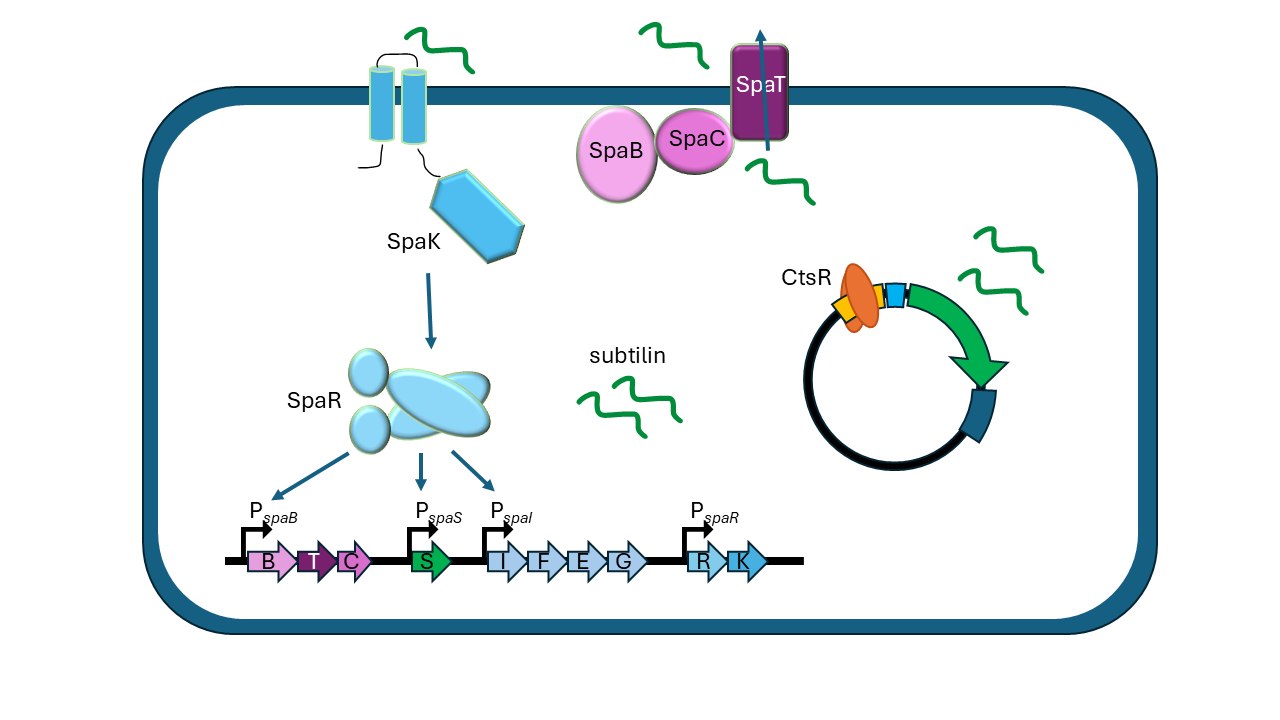 |
|---|
Parts level
In order to produce enough subtilin for purification and subsequent cellulose incorporation, we designed a plasmid that contains the subtilin gene and is inducible by addition of IPTG. The backbone plasmid is pHT01 and has a strong, IPTG-inducible promoter Pgrac. This plasmid is compatible with both E. coli and B. subtilis. We have designed the plasmid to include a His-tagged GFP – subtilin fusion with a TEV cut site (Figure 3). This will allow us to observe translation visually and help with purification.
| Figure 3. Proposed plasmid construct for subtilin expression using pHT01 plasmid backbone and his tagged GFP-subtilin fusion protein. | 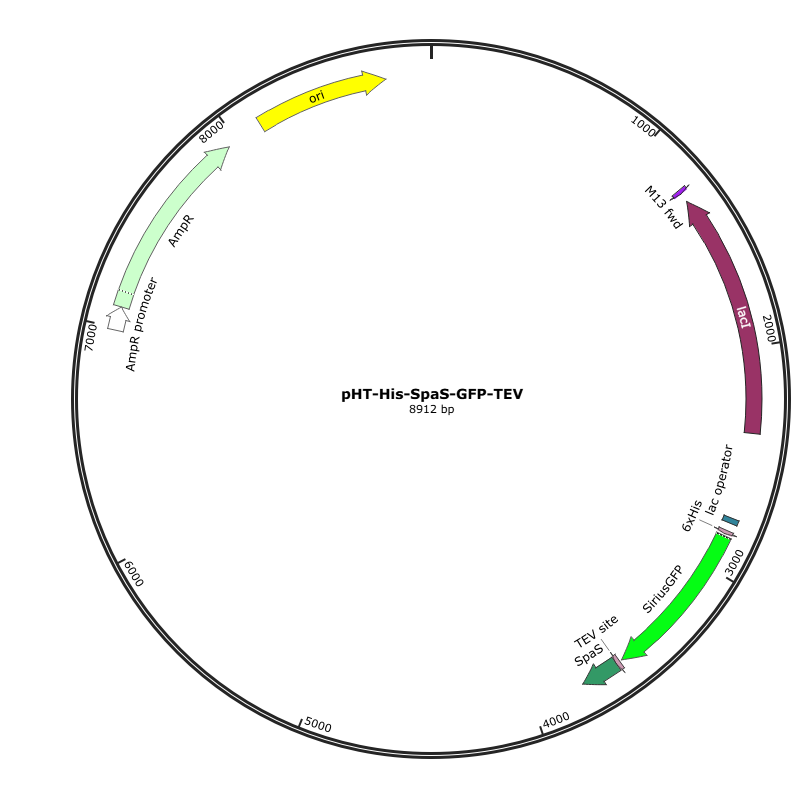 |
|---|
Safety
Although B. subtilis is generally considered non-pathogenic to humans, it has occasionally been associated with foodborne illness and produces potentially harmful extracellular enzymes such as subtilisin. While subtilisin has low inherent toxicity, repeated exposure can lead to allergic sensitization, particularly in occupational settings with high concentrations (Gill, 1982; Edberg, 1991). Reported effects include dermatitis and respiratory irritation, and subtilisin exposure is regulated by the Occupational Safety and Health Administration in the US and Public Health Agency of Canada.
Enzymes derived from B. subtilis, commonly used in products such as laundry detergents, have also been linked to hypersensitivity reactions, including dermatitis and respiratory distress (Norris et al., 1981; U.S. EPA, n.d.). Overall, the organism exhibits low virulence, and infection is rare—typically requiring either a very high microbial load or a compromised immune system (Edberg, 1991; U.S. EPA, n.d.).
Despite this low pathogenicity, the potential for irritation or allergic response—especially upon contact with broken skin—remains an important safety consideration. This is particularly relevant for applications involving direct contact with wounds, where the risk of infection or adverse reactions may be elevated. Database reports further suggest that, while uncommon, there is some level of individual-dependent pathogenic potential associated with B. subtilis (BacDive, n.d.).
Although B. subtilis is classified as a Biosafety Level 1 organism and is widely regarded as safe for healthy individuals (The University of Texas at Tyler Environmental Health and Safety, n.d.), its use in wound-contact applications—such as the proposed “Oat Shield” bandage—requires careful evaluation. Risk mitigation strategies must address both the microorganism itself and its bioactive products.
Importantly, the antimicrobial peptide subtilin, produced by B. subtilis, targets bacterial cell membranes without known toxicity to human cells. However, further validation is required to confirm its safety and efficacy in direct wound applications.
Discussions
Our project demonstrates that integrating agricultural waste with synthetic biology offers a promising pathway toward sustainable wound care. By combining oat husk derived cellulose with antimicrobial peptide production from B. subtilis, our system addresses two major challenges: medical waste accumulation and wound infection management.
We learned that B. subtilis can help wounds heal more efficiently and effectively through its production of the antimicrobial peptide subtilin. From our results, we learned that utilizing oak husk organic waste to produce biodegradable bandages is not only good for the environment, but is overall more cost effective, as we can buy the oat husks from Albertan farmers, contributing to a circular Albertan economy. Lastly, we learned the value of being able to discuss our project in less scientific terms with a more economic focus for a general audience, allowing us to better communicate with a greater variety of potential project stakeholders.
Despite the overall advantages, there are several important limitations to consider. One key challenge will be maintaining cellulose bandage structural integrity when introduced to moisture, as this is a factor in wound care. The subtilin production must also be carefully regulated to prevent the possibilities of skin irritations from excess subtilin. The stability and shelf life must also be taken into consideration because the bandage is biologically active, meaning it contains living bacteria. Storage and transport conditions must be consistent. Lastly, scaling of this product still overall requires optimization to maintain the environmental and economic benefits it provides.
We propose several strategies to minimize these challenges. Firstly, the structure of the cellulose bandage can be improved through increased cross linking of fibers or by reinforcing the material with nanofibrillated cellulose to enhance strength under moist conditions (Masoud et al., 2025). Secondly, regulation of subtilin production can be done by tuning the promoter strength or ribosome binding site to ensure controlled and safe antimicrobial levels (Zhang et al., 2022). Third, to address stability and shelf life concerns, B. subtilis could be incorporated in its spore form, which is naturally resistant to environmental stress, allowing for longer storage without loss of function (Zhang et al., 2020). Packaging under sterile and controlled conditions can also help maintain B. subtilis viability. Finally, though we do not yet have specific suggestions, scalability improvements will require investigation into efficient processing methods with regard to both energy input and cost.
Overall, our product is beneficial because it balances convenience with environmental factors. Though synthetic bandages are convenient to use, they are single use only and not biodegradable, contributing to more wastage. Our product is designed to maintain the convenience of traditional gauze bandages while being biodegradable and making use of an existing agricultural waste product, reducing waste on two fronts.
Next steps
Our next steps include moving the Oat-Shield project out of the planning phase into the prototyping phase. The prototyping phase is where we can focus on testing how well our B. subtilis works inside of the oat-cellulose material (our biological circuit and the oat-cellulose material). We propose three discrete research activities that are reasonable to be completed within a semester. First, we can focus on using the Hielscher Ultrasonic Flow-Cell Reactor to conduct and learn the absorbency of the cellulose matrix. By learning how much fluid the fibers can hold before they begin to break down, we can optimize the process to ensure that the bandage stays durable while in clinical use. As a second activity, we will monitor the germination and growth of our biologically engineered B. subtilis inside of the oat-fiber matrix. Because high concentrations of subtilin could potentially cause skin irritation and cellular stress, monitoring subtilin levels within the bandage is essential. This will allow us to confirm that the spaS promoter and RBS R0 are properly regulating subtilin production to maintain safe and effective levels for wound care and patient comfort. Finally, using UV-C light, we will verify the sterilization protocol for the bandages. Safety is a critical priority, and ensuring material stability is a key step in our process. This will allow us to confirm that the bandage is at a proper level of sterility, though we will also have to ensure that the B. subtilis spores remain viable for future germination. This improves storage efficiency as conditions such as temperature, humidity, and light control do not need regulation to store or transport our bandages, providing convenience for end users and removing considerations for scalability. Taken together, these 3 steps will allow us to demonstrate a successful proof of concept that can then be further scaled and developed as a functional consumer healthcare product.
Author contributions
SK, DO, AF, and KW wrote the Background Information section. MC wrote the Device level section. SK wrote the Parts level section. DO wrote the Reduction of agro waste in a circular bioeconomy section. MC, IB, and RR wrote the Safety section. HP, RL, AP, AC, and SS wrote the Discussions section. AP, AC, and LY wrote the Next steps section.
Acknowledgements
We would like to thank SynBridge and the University of Lethbridge’s Chemistry and Biochemistry Department for their support and encouragement. We also greatly appreciate MindFuel and their support of our project through the Tech Futures Challenge. The Alberta Women in Science Network has also previously provided funding for our projects and we are greatly appreciative of their support.
References
Ben David, N., Mafi, M., Nyska, A., Gross, A., Greiner, A., & Mizrahi, B. (2021). Bacillus subtilis in PVA microparticles for treating open wounds. ACS Omega, 6(21), 13647–13653. https://doi.org/10.1021/acsomega.1c00790
Bongers, R. S., Veening, J.-W., Van Wieringen, M., Kuipers, O. P., & Kleerebezem, M. (2005). Development and characterization of a subtilin-regulated expression system in Bacillus subtilis: Strict control of gene expression by addition of subtilin. Applied and Environmental Microbiology, 71(12), 8818–8824. https://doi.org/10.1128/AEM.71.12.8818-8824.2005
Bravo, D., Thiel, C., Bello, R., Moses, A., Paksima, N., & Melamed, E. (2023). What a waste! The impact of unused surgical supplies in hand surgery and how we can improve. Hand, 18(7), 1215–1221. https://doi.org/10.1177/15589447221084011
Carvalho, A. C. F., Ghosh, S., Hoffmann, T. G., Prudêncio, E. S., de Souza, C. K., & Roy, S. (2025). Valuing agro-industrial waste in the development of sustainable food packaging based on the system of a circular bioeconomy: A review. Cleaner Waste Systems, 11, 100275. https://doi.org/10.1016/j.clwas.2025.100275
Chavan, S., Mitra, D., & Ray, A. (2024). Harnessing rice husks: Bioethanol production for sustainable future. Current Research in Microbial Sciences, 7, 100298. https://doi.org/10.1016/j.crmicr.2024.100298
Dandash, A. A., Abu‐Jdayil, B., & Tannous, J. H. (2025). Lignin extraction from various biomass sources: A comprehensive review of characteristics, applications, and future prospects. Chemistry—A European Journal, 25(8), e202500045. https://doi.org/10.1002/tcr.202500045
Derré, I., Rapoport, G., & Msadek, T. (1999). CtsR, a novel regulator of stress and heat shock response, controls clp and molecular chaperone gene expression in gram-positive bacteria. Molecular Microbiology, 31(1), 117–131. https://doi.org/10.1046/j.1365-2958.1999.01152.x
Duong, D. (2023). Improper disposal of medical waste costs health systems and the environment. Canadian Medical Association Journal, 195(14), E518–E519. https://doi.org/10.1503/cmaj.1096046
Grandvalet, C., Coucheney, F., Beltramo, C., & Guzzo, J. (2005). CtsR is the master regulator of stress response gene expression in Oenococcus oeni. Journal of Bacteriology, 187(16), 5614–5623. https://doi.org/10.1128/JB.187.16.5614-5623.2005
Guiziou, S., Sauveplane, V., Chang, H.-J., Clerté, C., Declerck, N., Jules, M., & Bonnet, J. (2016). A part toolbox to tune genetic expression in Bacillus subtilis. Nucleic Acids Research, 44(15), 7495–7508. https://doi.org/10.1093/nar/gkw624
Heinzmann, S., Entian, KD. & Stein, T. Engineering Bacillus subtilis ATCC 6633 for improved production of the lantibiotic subtilin. Appl Microbiol Biotechnol 69, 532–536 (2006). https://doi.org/10.1007/s00253-005-0023-9
Hess, G. F., & Graham, R. S. (1990). Efficiency of transcriptional terminators in Bacillus subtilis. Gene, 95(1), 137–141. https://doi.org/10.1016/0378-1119(90)90425-Q
How quorum sensing works. (n.d.). ASM.org. Retrieved April 30, 2026, from https://asm.org/articles/2020/june/how-quorum-sensing-works
Jeong, D.-E., Park, S.-H., Pan, J.-G., Kim, E.-J., & Choi, S.-K. (2015). Genome engineering using a synthetic gene circuit in Bacillus subtilis. Nucleic Acids Research, 43(6), e42. https://doi.org/10.1093/nar/gku1380
Lackner, M., & Besharati, M. (2025). Agricultural waste: Challenges and solutions, a review. Waste, 3(2), 18. https://doi.org/10.3390/waste3020018
Liu, Z.-Y., & Yu, X.-Z. (2025). Engineering Bacillus subtilis for high-value bioproduction: Recent advances and applications. Microbial Cell Factories, 24, 182. https://doi.org/10.1186/s12934-025-02818-6
Masoud, A. R., Velisdeh, Z. J., Bappy, M. J. P., Pandey, G., Saberian, E., & Mills, D. K. (2025). Cellulose-based nanofibers in wound dressing. Biomimetics, 10(6), 344. https://doi.org/10.3390/biomimetics10060344
Medvedeva, T. B., Cherepanova, X. S., Parmon, V. N., & Gromov, N. V. (2023). Production of cellulose materials from oat agricultural wastes: A review of recent approaches (Version 1) [Preprint]. Preprints.org. https://doi.org/10.20944/preprints202312.0745.v1
Mukhopadhyay, S., Youssef, S. H., Song, Y., Nayak, U. Y., & Garg, S. (2025). Harnessing the power of antimicrobial peptides: From mechanisms to delivery optimization for topical infections. Antibiotics, 14(4), 379. https://doi.org/10.3390/antibiotics14040379
Nuutila, K., & Eriksson, E. (2021). Moist wound healing with commonly available dressings. Advances in Wound Care, 10(12), 685–698. https://doi.org/10.1089/wound.2020.1232
Queiroz, B. G., Ciol, H., Inada, N. M., & Frollini, E. (2021). Hydrogel from all lignocellulosic sisal fibers macromolecular components. International Journal of Biological Macromolecules, 181, 978–989. https://doi.org/10.1016/j.ijbiomac.2021.04.088
Rao, Y., Yang, J., Wang, J., Yang, X., Zhang, M., Zhan, Y., Ma, X., Cai, D., Wang, Z., & Chen, S. (2022). Minimization and optimization of α-amylase terminator for heterologous protein production in Bacillus licheniformis. Bioresources and Bioprocessing, 9, 108. https://doi.org/10.1186/s40643-022-00597-1
Ridyard, K. E., & Overhage, J. (2021). The potential of human peptide LL-37 as an antimicrobial and anti-biofilm agent. Antibiotics, 10(6), 650. https://doi.org/10.3390/antibiotics10060650
Riseh, R. S., Gholizadeh Vazvani, M., Hassanisaadi, M., & Thakur, V. K. (2024). Agricultural wastes: A practical and potential source for the isolation and preparation of cellulose and application in agriculture and different industries. Industrial Crops and Products, 208, 117904. https://doi.org/10.1016/j.indcrop.2023.117904
Rohmah, S., Wardiningsih, W., Zahro, F., Rudy, R., Mulyani, R. W. E., Pradana, S. M., & Wahidin, D. (2026). Utilization of agricultural waste: Fiber extraction and characterization from Zingiber zerumbet pseudo-stems for eco-friendly textiles. Bioresource Technology Reports, 33, 102502. https://doi.org/10.1016/j.biteb.2025.102502
Rollema HS, Kuipers OP, Both P, de Vos WM, Siezen RJ. Improvement of solubility and stability of the antimicrobial peptide nisin by protein engineering. Appl Environ Microbiol. 1995 Aug;61(8):2873-8. doi: 10.1128/aem.61.8.2873-2878.1995
Salle, A. J., & Jann, G. J. (1945). Subtilin—An antibiotic produced by Bacillus subtilis: I. Action on various organisms. Proceedings of the Society for Experimental Biology and Medicine, 60(1), 60–64. https://doi.org/10.3181/00379727-60-15091
Savitskaya, I. S., Shokatayeva, D. H., Kistaubayeva, A. S., Ignatova, L. V., & Digel, I. E. (2019). Antimicrobial and wound healing properties of a bacterial cellulose based material containing B. subtilis cells. Heliyon, 5(10), e02592. https://doi.org/10.1016/j.heliyon.2019.e02592
Stülke, J., Grüppen, A., Bramkamp, M., & Pelzer, S. (2023). Bacillus subtilis, a Swiss Army knife in science and biotechnology. Journal of Bacteriology, 205(5), e00102-23. https://doi.org/10.1128/jb.00102-23
Suda, S., Field, D., Barron, N. (2017). Antimicrobial Peptide Production and Purification. In: Walls, D., Loughran, S. (eds) Protein Chromatography. Methods in Molecular Biology, vol 1485. Humana Press, New York, NY. https://doi.org/10.1007/978-1-4939-6412-3_22
Velho, R. V., Basso, A. P., Segalin, J., Costa-Medina, L. F., & Brandelli, A. (2013). The presence of sboA and spaS genes and antimicrobial peptides subtilosin A and subtilin among Bacillus strains of the Amazon basin. Genetics and Molecular Biology, 36(1), 101–104. https://doi.org/10.1590/S1415-47572013000100014
Volkenborn, K., Kuschmierz, L., Benz, N., Lenz, P., Knapp, A., & Jaeger, K.-E. (2020). The length of ribosomal binding site spacer sequence controls the production yield for intracellular and secreted proteins by Bacillus subtilis. Microbial Cell Factories, 19(1), 154. https://doi.org/10.1186/s12934-020-01404-2
Warshaw, E. M., et al. (2008). Contact dermatitis associated with medical adhesives. Dermatitis, 19(2), 65–71. https://pubmed.ncbi.nlm.nih.gov/18346394/
Widman, T. J., Oostman, H., & Storrs, F. J. (2008). Allergic contact dermatitis from medical adhesive bandages in patients who report having a reaction to medical bandages. Dermatitis, 19(1), 32–37.
WoundSource. (n.d.). Benefits of moist wound healing. Retrieved April 30, 2026, from https://www.woundsource.com/blog/benefits-moist-wound-healing
Zhang, Q., Kobras, C. M., Gebhard, S., Mascher, T., & Wolf, D. (2022). Regulation of heterologous subtilin production in Bacillus subtilis W168. Microbial Cell Factories, 21, 57. https://doi.org/10.1186/s12934-022-01782-9
Zhang, X., Al-Dossary, A., Hussain, M., Setlow, P., & Li, J. (2020). Applications of Bacillus subtilis spores in biotechnology and advanced materials. Applied and Environmental Microbiology, 86(17), e01096-20. https://doi.org/10.1128/AEM.01096-20