
Shreya Soni, Andover High School, Andover, Massachusetts, United States
Reviewed on 9 May 2026; Accepted on 22 June 2026; Published on 26 October 2026
With help from the 2026 BioTreks Production Team.
Celiac disease (CD) is a serious autoimmune disorder that damages the small intestine in response to gluten. Despite affecting an estimated 1 in 100 people worldwide, current therapies rely exclusively on dietary restriction, something that is difficult to maintain and fails to prevent inadvertent exposure. To address this therapeutic gap, this project proposes a synthetically engineered Escherichia coli Nissle 1917 (EcN) probiotic pill designed to reduce gluten-induced inflammation in individuals with CD. The engineered EcN functions as an autonomous “sense-and-respond” system by detecting Nitric Oxide (NO), a key biomarker of gluten-induced intestinal inflammation, through a synthetic gene circuit. Upon NO detection via the PnorV promoter, the circuit triggers the localized secretion of interleukin-10 (IL-10), a potent anti-inflammatory cytokine, directly in the intestinal lumen. Above all, the strain is engineered with a biocontainment “kill switch” to ensure safety and precision for individuals. By modulating the mucosal immune response directly at the site of inflammation, this pill aims to suppress T-cell-mediated damage, preventing subsequent villous atrophy. This synthetic biology solution offers a proactive alternative to strict dietary management, potentially mitigating the long-term stress and damage caused by accidental gluten consumption and significantly improving the quality of life for individuals with CD.
Keywords: Celiac disease, E. coli Nissle 1917, probiotic pill, inflammation, IL-10
Authors are listed in alphabetical order. Lindsey L'Ecuyer mentored the group. Please direct all correspondence to mailto:lindsey.lecuyer@andoverma.us.



Background
Celiac disease (CD), also known as gluten-sensitive enteropathy, is an autoimmune inflammatory condition triggered by an immune-mediated response to dietary gluten (a protein found in wheat, barley, and rye) in genetically predisposed individuals (Mayo Clinic, 2023). Affecting approximately 1 in 100 people, CD is driven by an inappropriate immune response to gluten peptides, particularly in individuals obtaining the HLA-DQ2 or HLA-DQ8 genetic haplotypes (Posner & Haseeb, 2025). Upon gluten ingestion, the protein is broken down into peptides that the immune system recognizes, initiating the activation of both innate and adaptive immune responses (Ciccocioppo et al., 2005). Specifically, this response correlates to damage in the small intestinal mucosa—the three-layered membrane that lines the insides of the body and secretes mucus to capture invaders (such as influenza A and B)— leading to villous atrophy, gastrointestinal symptoms, malabsorption of important nutrients, and a range of symptoms including abdominal pain and osteoporosis (Celiac Disease Foundation, 2025).
A distinctive attribute of CD is the inflammatory response in the small intestine that is crucial in the progression of the disease (Barone et al., 2022). Inflammation is the body’s response to illness, injury, or a foreign object such as germs or toxic chemicals (Cleveland Clinic, 2021). Usually, inflammation is a protective mechanism, but in people with CD, it becomes dysregulated and this lack of homeostasis instead leads to chronic inflammation and tissue damage (Barone et al., 2022). Pro-inflammatory cytokines, in particular tumor necrosis factor-alpha (TNF-α), are key factors in this process (Cleveland Clinic, 2023). TNF-α is produced predominantly by activated macrophages, T cells, and natural killer cells and exists in both soluble and transmembrane forms. It binds to Tumor Necrosis Factor Receptor 1 (TNFR1) and Tumor Necrosis Factor Receptor 2 (TNFR2) to trigger signaling cascades related to inflammation, cell survival, and immune cell requirements. TNF-α activates NF-κB signaling, which upregulates inducible nitric oxide synthase (iNOS), leading to increased production of nitric oxide (NO) in intestinal epithelial and immune cells. As a result, NO levels rise in the gut microenvironment, linking inflammatory signaling to measurable biochemical stress markers. Moreover, elevated TNF-α levels give rise to tissue damage and chronic inflammation in the celiac gut, making it a key therapeutic target in the management of CD (Rezaei-Tavirani et al., 2019).
Current management of CD is solely dependent on lifelong gluten-free diets, which can be difficult to adhere to as a result of accidental cross-contact with gluten-enriched food because of shared kitchen equipment, mislabeled products, or trace contamination. Many people are also often unaware of the presence of gluten in common commodities such as Play-Doh, cosmetics, hygiene products, etc. Unregulated health practices in terms of food handling and labeling practices, along with environmental and socioeconomic limited factors, add to this risk, causing individuals to often compromise their health (Cross-Contact | BeyondCeliac.org, n.d.). As a result, a definitive cure is crucial to allowing those with CD to live their life to the fullest without needing to constantly monitor their diets.
At this time, no therapies for CD have been found to address the disease in a comprehensive and effective way, but there have been promising candidates. Currently, companies such as ZymagenX and Sanofi are in the process of developing treatments to target CD and other related conditions in which inflammation is a key mechanism. Specifically, ZymagenX’s Latiglutenase is a supplement to one’s natural diet that is a mixture of two-gluten-specific enzymes responsible for breaking it down into smaller proteins. Sanofi’s Amlitelimab, a fully human, non-T cell depleting monoclonal antibody designed to block OX40-Ligand, aims to reduce gluten-induced intestinal changes in patients with non-responsive CD. However, these treatments are still in the initial phases of the research and development process, being far from FDA approval. While anti-TNF-α monoclonal antibodies therapies like infliximab and adalimumab, which block TNF-α or its receptor interactions, have shown success in other autoimmune diseases, they are often expensive, systemically immunosuppressive, and can have negative side effects like carrying risks for infections and lymphoma (Hoey et al., 2019; Lee et al., 2024). Moreover, the expected costs of these therapeutics are quite expensive for the average patient, adding another burden onto them beyond medical bills, daily expenses, and lifestyle upkeep. Therefore, there is a grave necessity for a treatment that is affordable and can address the inflammatory and intestinal homeostasis involved with CD in an effective way.
One promising anti-inflammatory target is interleukin-10 (IL-10), a cytokine secreted by many cells such as macrophages, dendritic cells, and T cells. IL-10 inhibits pro-inflammatory cytokines like TNF-α by signaling through the JAK1-TYK2-STAT3 pathway, limiting damage to tissue and promoting immune tolerance. Most importantly, IL-10 supports the repair of the intestinal epithelial lining, an important facet in the recovery of patients with CD (Manavalan et al., 2010). Although IL-10 can exhibit pro-inflammatory effects under certain conditions, particularly in the presence of uncontrolled immune activation or in cancer microenvironments, its role in the gut in response to TNF-α is primarily anti-inflammatory and immunoregulatory. In this context, IL-10 functions to restore mucosal homeostasis and suppress excessive inflammation, making it a suitable therapeutic candidate for CD (Islam H et al. 2021).
This research aims to engineer E. coli Nissle 1917 (EcN) as a localized and responsive anti-inflammatory system that dampens intestinal inflammation and restores immune homeostasis in patients with CD by producing a modified IL-10 fusion protein. The system will use a genetically modified plasmid to control gene expression through NO sensing and the TNF-a signaling pathways. Moreover, a kill switch would also be included to ensure safety and control.
As a result, EcN represents a safer and targeted alternative to the monoclonal antibody therapies due to its ability to deliver treatment locally in the gut, reducing the risk of systemic immunosuppression.
Systems level
The proposed biological system is a living, time-dependent therapeutic with a chassis that will function autonomously in the gastrointestinal (GI) tract of individuals with CD. The chassis will be genetically engineered with a synthetic stimulus-response circuit designed to detect inflammatory biomarkers and to deliver a localized anti-inflammatory agent. The main goal of this system will be to recognize the presence of TNF-α-associated inflammatory activity indirectly through elevated NO levels, which occur downstream of the TNF-α-induced iNOS activation in inflamed intestinal tissue. This enables the chassis to respond to the overall inflammation present in the gut microbiome rather than just addressing the stress caused by the cytokines. NO will be the primary input to the system, acting as the real-time indicator of inflammation in the intestinal lumen. After this signal has been received, IL-10 will be produced as the therapeutic payload, allowing for immune homeostasis to be restored through the alleviation of the intense inflammation.
Through this coupled detection and delivery mechanism, this system aims to continuously monitor and respond to changes in the intestinal environment, serving as a closed-loop therapeutic. As NO levels in the gut fluctuate, the system will proportionately adjust IL-10 production.If NO levels increase, IL-10 production will be upregulated to counteract the immune regulation; and if NO levels decrease, the therapeutic output will reduced minimizing unnecessary intervention and IL-10 presence in the gut environment. The use of this controlled system prevents the probability of excessive immunosuppression, ensuring that downstream expression occurs only during periods of active inflammation. Additionally, the system enables precision and targeted relief, reducing risks associated with accidental release while effectively managing the inflammatory conditions in CD.
| Figure 1. Systems-level overview of the engineered probiotic therapeutic circuit for celiac disease. Partially digested gluten peptides cross the intestinal epithelium and activate innate immune receptors on immune cells, leading to NF-κB pathway activation and production of the pro-inflammatory cytokine TNF-α. TNF-α induces expression of inducible nitric oxide synthase (iNOS), which converts L-arginine into nitric oxide (NO), a biomarker of intestinal inflammation. The engineered bacterial chassis is designed to detect elevated NO levels and respond by producing the anti-inflammatory cytokine interleukin-10 (IL-10), providing a targeted therapeutic response to inflammation associated with CD. | 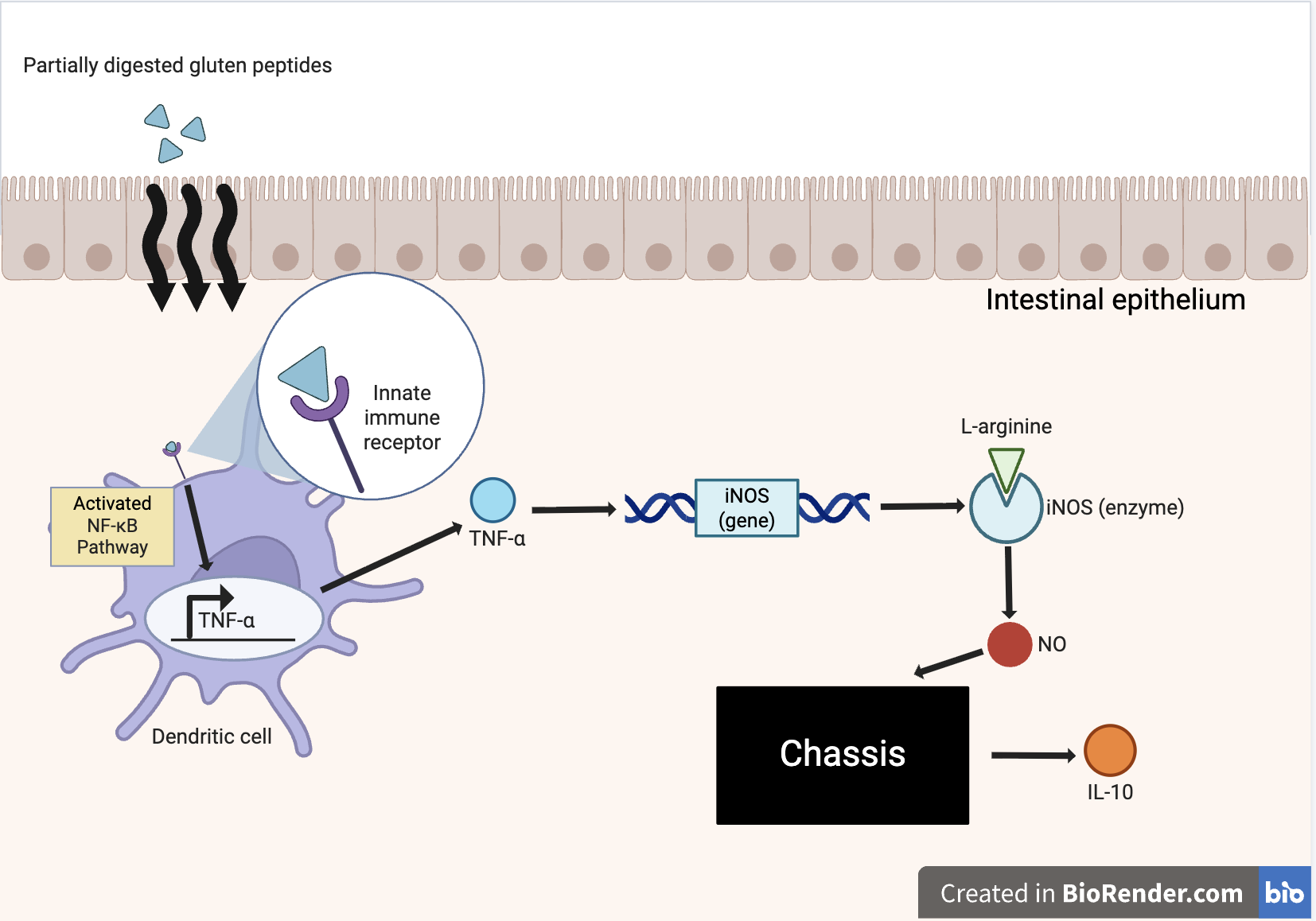 |
|---|
Device level
The proposed chassis for this system is E. coli Nissle 1917 (EcN). EcN is a gram-negative bacterium that has conventionally been used in many gastrointestinal disorders, including diarrhea, uncomplicated diverticular disorder, and ulcerative colitis (Scaldaferri et al., 2016) . Most notably, it has been used in the pharmaceutical probiotic Mutaflor, engineered to handle constipation and bowel disorders with minimal side effects (Kruis et al., 2012). This strain of E. coli lacks common virulence factors that make bacteria harmful, such as a-hemolysis and P-fimbrial adhesins, which makes it an optimal device for therapeutic applications (Park et al., 2022). EcN contains microcins and multiple iron uptake systems along with adhesins and proteases, which enhance its ability to colonize the gut and compete within the microbiome . Additionally, EcN doesn’t produce any known toxins, it is serum sensitive and has a non-toxic lipopolysaccharide (LPS) structure, meaning that it is easily controlled by the body and doesn’t overstimulate the immune system (Scaldaferri et al., 2016). EcN’s natural adaptation to the gut environment enables a localized response to the site of inflammation, facilitating continuous monitoring of inflammatory biomarkers. Moreover, its compatibility with genetic modification and its ability to persist without disrupting the native microbiome streamlines the implementation of plasmid DNA, confirming that the chassis can reliably support the engineered sensing and response system. As can be seen, these characteristics make EcN an ideal candidate for the delivery of engineered probiotic therapies that must function safely and effectively within the human gastrointestinal tract. Although studies have proven that EcN itself can induce the production of IL-10 in gut cells, engineering the chassis with a gene circuit that selectively secretes IL-10 in response to periods of active inflammation will curtail the chance of an excess or scarcity of the cytokine. This will be accomplished by employing e modules into the system: the sensing module, the response module, and the biocontainment module. All of these modules are detailed below.
Sensing module
As the initial step of the gene circuit, the sensing module is responsible for detecting the presence of high NO levels in the intestinal lumen. Specifically, this module uses the NorR/PnorV regulatory system, in which the transcription factor NorR is constitutively expressed within the EcN chassis. Under dormant phases, NorR is inactive, causing the PnorV promoter not to be expressed. During intense inflammation, however, the elevated levels of NO diffuse into the EcN cell and bind to the NorR, inducing a conformational change that activates the protein and interacts with the σ⁵⁴ RNA polymerase complex to initiate transcription from the PnorV promoter. This allows the system to register the presence of inflammation via NO and transform it into a genetic response that can trigger the downstream expression of IL-10 genes, restoring immune homeostasis. The module also ensures that the chassis is able to adapt to the changes in the gut environment that it senses, producing IL-10 in accordance with the intensity of the signal.
Response module
Upon the activation of the PnorV promoter, downstream expression of the IL-10 gene is initiated, with the intent of appeasing the intense inflammation. In order to successfully be delivered locally, the IL-10 is exported out of the bacterium using a secretion system such as YebF, a small protein that is naturally discharged by the EcN. Secretion tags like YebF simplify downstream processing by acting as carrier proteins, facilitating the export of cellular material and products despite polarity, affinity to water, and size. Once secreted with the YebF, the IL-10 functions through the suppression of pro-inflammatory cytokine signaling, such as the NF-κB pathway involved with TNF-α, which allows for the repair of the villi on the epithelial cells as well as improved immune tolerance to gluten. Additionally, IL-10 is able to downregulate the expression of iNOS protein, reducing excessive NO production and therefore limiting tissue damage.
Biosafety module
To prevent any potential harmful effects and a prolonged presence in the environment, such as malabsorption and bone weakness which are already associated as negative side-phenomena of CD, a biosafety module will be implemented, specifically through the incorporation of a kill switch. This safety mechanism will be designed to restrict the survival of the EcN to within the gastrointestinal tract through the gut-specific environmental cues. These characteristics include temperatures, availability of nutrients, and/or bile salt concentration. Without the optimal conditions, the kill switch is activated, causing the bacteria to initiate cell apoptosis through the controlled expression of the lytic or toxin-antitoxin system. This will ensure that the system will only operate inside of its intended environment and will stop functioning if it happens to travel beyond it. Moreover, it adds another layer of specificity and protection, lessening the impact of correlated perils, horizontal gene transfer, and long-term colonization beyond the host gut.
| Figure 2. Device-level architecture of the engineered E. coli Nissle 1917 (EcN) therapeutic system. Elevated nitric oxide (NO), a biomarker of intestinal inflammation, diffuses into the engineered EcN chassis and activates the transcription factor NorR. Activated NorR interacts with σ⁵⁴ RNA polymerase to induce transcription from the NO-responsive PnorV promoter, initiating expression of the anti-inflammatory cytokine interleukin-10 (IL-10). Secreted IL-10 acts locally within the intestinal environment to suppress inflammatory signaling and promote immune homeostasis. To enhance biosafety, a kill-switch module is activated by environmental conditions outside the gastrointestinal tract, such as changes in pH or temperature, or after a predetermined period following administration, resulting in programmed bacterial cell death and limiting long-term persistence or environmental release of the engineered strain. | 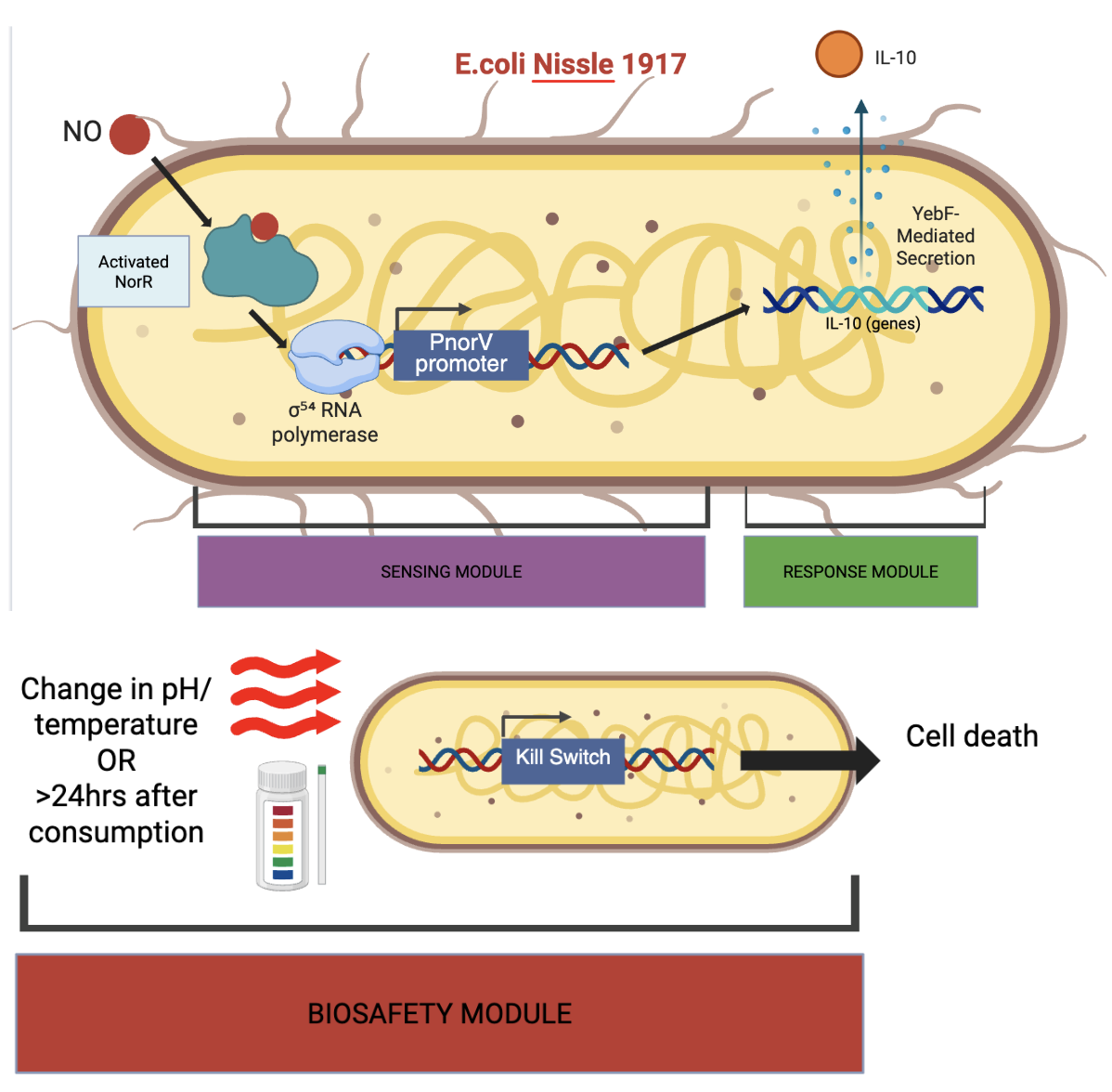 |
|---|
Parts level
The genetic construct described in Table 1 is assembled into a single plasmid-based system that enables coordinated regulation of sensing, response, and safety functions within E. coli Nissle 1917.T he synthetic DNA fragments corresponding to each of the parts of the plasmid will be ordered as one large fragment that will be assembled into the plasmid backbone via HiFi assembly into pTU2S-b. pTU2S-b is a low-copy plasmid backbone that has widely been used by researchers for similar projects and it will ensure that metabolic burden is minimized and allow for physiologically relevant expression of genes
Table 1: Parts of the engineered genetic construct and their functions.
| Part | Function |
|---|---|
| NorR transcription factor (NO-responsive regulator) | Constitutively expressed regulatory protein that detects elevated nitric oxide levels and activates downstream transcription through conformational change upon NO binding. |
| PnorV promoter (NO-inducible promoter) | Acts as the primary regulatory switch that initiates transcription in response to activated NorR under inflammatory, nitric oxide-rich conditions.The use of this promoter will ensure that IL-10 will be secreted only when excess NO levels have been detected, preventing unnecessary immune suppression when inflammation is present. |
| B0034 (Ribosome Binding Site) | This ribosome binding site is placed before the coding sequences of the YebF-IL-10 secretion tag so that an appropriate amount of ribosomes is securely bound to the mRNA sequence and begin translating these proteins. This ensures that the proteins involved in the detection and response phases are properly synthesized and are able to accomplish their tasks (Part: BBa B0034 – Parts.igem.org, n.d.). |
| YebF-IL-10 | This fusion protein is important for the anti-inflammatory cytokine production aspect of the system. The YebF secretion tag enables the human IL-10 to be secreted outside of the EcN cell into the gut so that it can respond to the inflammation by reducing it (Part: BBa K2817009 – Parts.igem.org, 2018). Fusing the IL-10 with the YebF ensures that IL-10 is secreted only when it is needed and simplifies the transporting process(Part: BBa K554004 – Parts.igem.org, n.d.). |
| B0015 Terminator | This terminator is placed at the end of the plasmid to prevent the RNA polymerase from reading through the transcriptional units and mediating the gene expression to make sure that it is regulated (Shetty, 2003). |
| Chloramphenicol Resistance | This antibiotic resistance marker ensures that only bacteria carrying the plasmid will survive the presence of the antibiotic, Chloramphenicol (Part: BBa K2926077 – Parts.igem.org, 2019). |
| p15A Ori | This origin of replication is a medium-copy plasmid origin and is the site where plasmid replication is initiated. It ensures that the plasmid is correctly and efficiently replicated within the EcN, and it is compatible with the EcN, which allows the plasmid to be maintained at a high copy number during bacterial cell division, maximizing the output of the system (Part: BBa K2560046 – Parts.igem.org, 2018). |
| Kill switch | This kill switch will be adapted from Rottinghaus et al., in which Cas9 expression is driven by a TetR-repressible promoter and TetR is placed under control of the TlpA* thermal biosensor. At 37 °C, the TlpA* repressor permits transcription of TetR from the PtlpA promoter; TetR in turn represses Cas9 and guides RNA expression. Upon a temperature drop below ~33 °C (e.g., following host excretion), TlpA* represses PtlpA, TetR is rapidly depleted, and Cas9 together with three genomically targeted gRNAs drives lethal double-strand breaks at 11 loci across the chromosome (Rottinghaus et al., 2022). |
| Figure 3. Plasmid design of the engineered E. coli Nissle 1917 nitric oxide-responsive therapeutic system. The construct contains a constitutively expressed norR transcription factor that detects elevated nitric oxide (NO) levels and activates the NO-inducible promoter (PnorV). Upon activation, the PnorV-driven expression cassette produces a YebF–IL-10 fusion protein, enabling secretion of the anti-inflammatory cytokine IL-10 into the gut environment. The plasmid also includes the B0034 ribosome binding site, B0015 terminator, p15A origin of replication, and chloramphenicol resistance marker for plasmid maintenance and selection. A temperature-sensitive biocontainment kill switch consisting of TlpA*, TetR, Cas9, and three guide RNA cassettes are incorporated to eliminate engineered bacteria following host excretion, enhancing environmental safety. | 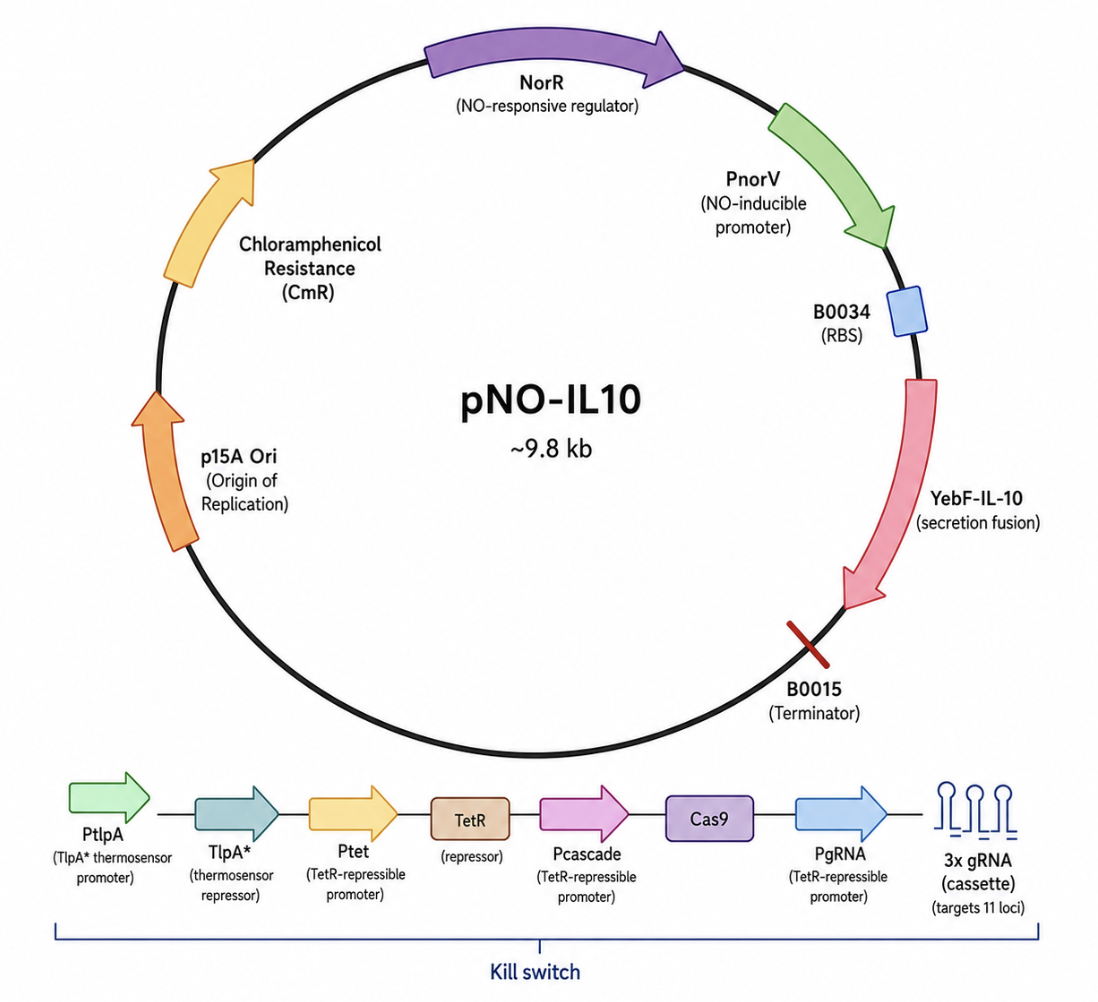 |
|---|
Each genetic part is strategically positioned within the plasmid to ensure proper transcriptional control, protein expression, and biosafety. Together, these components form an integrated circuit that allows the engineered chassis to detect inflammatory signals and produce a localized IL-10 response under controlled conditions.
Safety
The engineered EcN will be constructed and tested underneath Biosafety Level 1, as it is a defined organism and unlikely to cause disease (Trapotsis, 2022). Since it is classified at this level, this means that it is suitable to be handled by people with different expertise levels, ranging from seasoned industry professionals to high school students. In prior cases, strains of EcN have received GRAS (Generally Recognized As Safe) status under FDA approval, and the similar nature of this design proposal offers a promising conviction that any potential risk of harm could be mitigated (FDA, 2023).The inclusion of the kill switch within the system adds a degree of security, ensuring that the EcN will be confined to the gut and not travel to an external environment. In other words, if the EcN experiences a change in oxygen, pH, temperature, or is in an environment with a lack of gut-specific nutrients, it will initiate cell-lysis, preventing unnecessary and malignant growth in the lab environment, as shown in Figure 3 (Sterling et al., 2017). Additional safety controls may include adding more triggers to the EcN before it secretes IL-10, such as other pro-inflammatory cytokines or adding a limiting gene that self-destructs after a certain amount of time or number of cell replications. These steps will ensure that the production of IL-10 occurs under stricter circumstances and that the treatment is temporary, controlled, and renewable.
Beyond this, containment measures like confining the EcN in petri dishes, using sterile techniques, and proper waste decontamination protocols will be applied throughout the project to prevent bacterial escape into the environment (LaVan & Marmon, 2010). All researchers involved in the execution portion of this research will be required to obtain training in biosafety practices and follow institutional guidelines for genetic engineering/synthetic biology. This will include the use of personal protective equipment like lab coats, gloves, and safety goggles, the proper sanitation of laboratory areas used during the experiments, as well as a strong foundation in handling genetically modified organisms in a responsible and careful fashion.
As the project progresses, continuous risk assessments and regular updates to safety protocols will be performed to account for any modifications to the organism, system design, and laboratory/industry regulations (Trapotsis, 2022). These combined practices confirm the safe development, handling, and eventual testing of the engineered EcN, upholding both scientific integrity and public health standards.
Discussions
The engineered EcN presented in this project depicts a new and focused approach to addressing the chronic intestinal inflammation associated with CD. Through the design of the modular synthetic circuit with TNF–a responsive capability (via NO detection) and localized excretion of IL-10, this system considers a key pathological driver of CD that is often overlooked:dysregulated immune response in the gut. While conventional treatments are related to multiple systemic side effects, this probiotic pill offers a potentially less invasive alternative(Lee et al., 2024; Saraiva et al., 2019). Additionally, the specificity of the genetic circuit, which produces a response that is proportional to the excess levels of NO present, validates that the therapeutic response is solely based on active inflammation in the gut, streamlining the system and making it conditionally responsive (Celiac Disease Foundation, 2025; Islam et al., 2021).
A key strength of this system is its modular architecture, which allows each functional component to be independently tuned and optimized. This design improves adaptability and enables iterative improvement without requiring complete redesign of the circuit. Additionally, the use of a low-copy plasmid backbone (pTU2S-b) reduces metabolic burden on E. coli Nissle 1917, increasing the likelihood of stable expression in physiologically relevant conditions.
Using EcN as a chassis strengthens the durability and feasibility of the system because of its safety features, compatibility with the human intestine and gut microbiome, and ability to reproduce/clone quickly in comparison to other organisms (Scaldaferri et al., 2016; Trapotsis, 2022). Also, the IL-10 emission via the YebF lets therapeutic efforts take place without lysis of the EcN, which preserves the functionality of the system (Jang et al., 2021). Nonetheless, several considerations remain. Since the inflammatory environment in CD patients varies in intensity and can be caused by a combination of cytokines, it may be difficult for the EcN system to recognize changes in TNF-α levels through the NO and significantly de-escalate inflammation (Hoey et al., 2019; Rezaei-Tavirani et al., 2019; Alper et al., 2005). Differences in gut microbiome composition, pH, and host genetics might influence the impact and colonization strategy of the engineered EcN, causing it to display a different behavior than intended. Challenges in scaling production, consistent plasmid retention, and the prevention of horizontal gene transfer of the engineered elements to native microbes also pose potential biosafety risks (Manavalan et al., 2010; Trapotsis, 2022). Beyond this, NO levels can be elevated above the normal reason for factors other than gluten-mediated inflammation such as post-exercise or after the consumption of nitrate-rich foods (Carlström, 2021). This introduces a potential limitation in signal specificity, as the circuit may respond to inflammatory conditions not uniquely associated with celiac disease, potentially leading to unintended or excessive IL-10 release. As a result, further refinement of the sensing module or incorporation of additional regulatory logic—such as multi-input logic gates responding to multiple biomarkers (e.g., TNF-α in combination with NO)—may be required to improve disease-specific targeting.
Taking all of this information into consideration, future research should continue to explore multi-cytokine detection circuits, the interactions between EcN and the gut, and refined biocontainment strategies. If correctly implemented, this system could revolutionize the way immune-mediated gastrointestinal diseases are treated through precision, biocompatibility, and patient-centered innovation.
Next steps
To further develop the proposed system, implementation will follow a structured four-phase experimental workflow designed to enable iterative design, validation, and optimization of the engineered probiotic circuit. The genetic construct will initially be assembled in a low-copy plasmid backbone (pTU2S-b) to minimize metabolic burden and support physiologically relevant gene expression levels.
Phase 1: Circuit design and computational validation
The genetic circuit will first be designed in silico using Benchling. The plasmid will include four core components: constitutive expression of norR, the NO-inducible promoter PnorV, a YebF–IL-10 fusion protein for extracellular cytokine delivery, and a genetic biocontainment switch. All coding sequences will be codon-optimized for E. coli Nissle 1917 (EcN) to improve translational efficiency. Ribosome binding sites will be designed using an RBS calculator to tune expression levels appropriate for a low-copy plasmid system. Strong transcriptional terminators will be placed between genetic modules to prevent transcriptional read-through, and linker sequences will be optimized to preserve fusion protein functionality. In this phase, design decisions will prioritize circuit stability, minimal off-target expression, and modularity for downstream iteration (Brophy et al., 2014).
Phase 2: Plasmid assembly, cloning, and sequence verification
The full genetic construct will be synthesized as a DNA fragment with flanking homology regions compatible with HiFi assembly into the pTU2S-b backbone. PCR amplification will be used to generate sufficient material, followed by gel electrophoresis verification and gel extraction purification. The purified insert and backbone will then be assembled via HiFi cloning and transformed into chemically competent E. coli DH5α using heat shock transformation. Following recovery, transformants will be selected on antibiotic-containing media, and successful clones will be screened via colony PCR and confirmed through Sanger sequencing, targeting ≥95% sequence fidelity relative to the designed construct. Glycerol stocks of validated clones will be stored for downstream experiments. To reduce cost and enable early functional validation, GFP will initially replace IL-10 downstream of PnorV as a reporter output. This allows quantitative measurement of NO-responsive activation prior to introducing the therapeutic payload (Cameron et al., 2014).
Phase 3: Functional validation of NO sensing and IL-10 production in EcN
Following validation in DH5α, the plasmid will be transformed into EcN for functional testing under in vitro conditions. Cells will be exposed to graded concentrations of the NO donor S-nitroso-N-acetylpenicillamine (SNAP) (0, 50, 100, and 200 µM) to simulate inflammatory conditions associated with celiac disease pathophysiology.In the initial validation stage, GFP fluorescence will be measured over time (up to 10 hours, sampled every 2 hours) to quantify PnorV-driven promoter activation. Successful system performance will be defined as at least a three-fold induction at 100 µM SNAP relative to baseline. Once NO-responsiveness is confirmed, GFP will be replaced with the IL-10 expression cassette. IL-10 secretion will then be quantified under identical conditions using enzyme-linked immunosorbent assay (ELISA), with target output levels of ≥50 pg/mL at 100 µM SNAP and ≤10 pg/mL under basal conditions. Specificity will be evaluated by exposing cells to alternative inflammatory stressors, including TNF-α and hydrogen peroxide, to confirm selective activation by nitric oxide (Canton et al., 2008).
Phase 4: Biocontainment and kill switch validation
After confirming therapeutic functionality, the genetic biocontainment system will be evaluated under permissive and non-permissive conditions. Growth will be monitored via optical density (OD600) measurements over time, and viability will be assessed through colony-forming unit (CFU) plating assays.Successful kill switch function will be defined as ≥90% growth suppression under non-permissive conditions and near-complete loss of viability over a 12-hour period. To simulate real-world application safety, the system will also be evaluated under encapsulated conditions resembling oral delivery, including enteric capsule exposure and environmental stress testing.
Several technical limitations may arise during implementation. Promoter leakage could result in basal IL-10 expression; this may be mitigated by switching to a stricter low-copy backbone or further tuning ribosome binding site strength. If YebF-mediated secretion proves inefficient, alternative linkers or secretion systems such as HlyA may be explored. In the case of incomplete kill switch activation, a multi-layered containment strategy incorporating toxin–antitoxin systems such as MazEF under delayed activation control may be implemented.
Author contributions
SS was the sole author on this project and handled all components of it, utilizing the mentorship of Dr. Lindsey L’Ecuyer and Ms. Jackie Thompson throughout the process.
Acknowledgements
I would like to thank my BioBuilder club mentor, Dr. Lindsey L’Ecuyer, and my industry mentor, Ms. Jackie Thompson, for their invaluable guidance and mentorship throughout the course of our project. Their expertise in the field of synthetic biology and unwavering dedication to my success have been instrumental to the completion of this research. Furthermore, their passion for science and enthusiasm for teaching have been an inspiration for me and have motivated me to pursue further research in the field of synthetic biology. I am truly thankful for their support and guidance, and I could not have completed this project without them.
References
Alper, H., Fischer, C., Nevoigt, E., & Stephanopoulos, G. (2005). Tuning genetic control through promoter engineering. Proceedings of the National Academy of Sciences, 102(36), 12678–12683. https://doi.org/10.1073/pnas.0504604102
Barone MV, Auricchio R, Nanayakkara M, Greco L, Troncone R, Auricchio S. Pivotal Role of Inflammation in Celiac Disease. Int J Mol Sci. 2022 Jun 28;23(13):7177. doi: 10.3390/ijms23137177. PMID: 35806180; PMCID: PMC9266393.
Brophy, J. A. N., & Voigt, C. A. (2014). Principles of genetic circuit design. Nature Methods, 11(5), 508–520. https://doi.org/10.1038/nmeth.2926
Cameron, D. E., Bashor, C. J., & Collins, J. J. (2014). A brief history of synthetic biology. Nature Reviews Microbiology, 12(5), 381–390. https://doi.org/10.1038/nrmicro3239
Canton, B., Labno, A., & Endy, D. (2008). Refinement and standardization of synthetic biological parts and devices. Nature Biotechnology, 26(7), 787–793. https://doi.org/10.1038/nbt1413
Carlström M. (2021). Nitric oxide signalling in kidney regulation and cardiometabolic health. Nature reviews. Nephrology, 17(9), 575–590. https://doi.org/10.1038/s41581-021-00429-z
Celiac Disease Foundation. (2025). What Is Celiac Disease? Celiac Disease Foundation. https://celiac.org/about-celiac-disease/what-is-celiac-disease/
Ciccocioppo, R., Di Sabatino, A., & Corazza, G. R. (2005). The immune recognition of gluten in coeliac disease. Clinical and Experimental Immunology, 140(3), 408–416. https://doi.org/10.1111/j.1365-2249.2005.02783.x
Cleveland Clinic. (2021). Inflammation: What is it, causes, symptoms & treatment. Cleveland Clinic. https://my.clevelandclinic.org/health/symptoms/21660-inflammation
Cleveland Clinic. (2023, March 1). What Are Cytokines? Types and Function. Cleveland Clinic. https://my.clevelandclinic.org/health/body/24585-cytokines
Cross-Contact | BeyondCeliac.org. (n.d.). Beyond Celiac. https://www.beyondceliac.org/gluten-free-diet/cross-contact/
ELISA Technique. (2023, May 15). Cleveland Clinic; Cleveland Clinic. https://my.clevelandclinic.org/health/articles/24990-elisa
FDA. (2023, October 17). Generally Recognized as Safe (GRAS). U.S. Food and Drug Administration. https://www.fda.gov/food/food-ingredients-packaging/generally-recognized-safe-gras
Hoey, R. J., Eom, H., & Horn, J. R. (2019). Structure and development of single domain antibodies as modules for therapeutics and diagnostics. Experimental Biology and Medicine, 244(17), 1568–1576. https://doi.org/10.1177/1535370219881129
iGEM Registry. (2026). Igem.org. https://registry.igem.org/parts/bba-k2116002
Islam H, Chamberlain TC, Mui AL and Little JP (2021). Elevated Interleukin-10 Levels in COVID-19: Potentiation of Pro-Inflammatory Responses or Impaired Anti-Inflammatory Action? Front. Immunol. 12:677008. doi: 10.3389/fimmu.2021.677008
Jang, D., Lee, A-Hyeon., Shin, H.-Y., Song, H.-R., Park, J.-H., Kang, T.-B., Lee, S.-R., & Yang, S.-H. (2021). The Role of Tumor Necrosis Factor Alpha (TNF-α) in Autoimmune Disease and Current TNF-α Inhibitors in Therapeutics. International Journal of Molecular Sciences, 22(5). https://doi.org/10.3390/ijms22052719
Kruis, W., Chrubasik, S., Boehm, S., Stange, C., & Schulze, J. (2012). A double-blind placebo-controlled trial to study therapeutic effects of probiotic Escherichia coli Nissle 1917 in subgroups of patients with irritable bowel syndrome. International journal of colorectal disease, 27(4), 467–474. https://doi.org/10.1007/s00384-011-1363-9
LaVan DA, Marmon LM. Safe and effective synthetic biology. Nat Biotechnol. 2010 Oct;28(10):1010-2. doi: 10.1038/nbt1010-1010. PMID: 20944581; PMCID: PMC2956601.
Lee, N. J., Jung, M., Yang, H. Y., & Shim, H. (2024). A single-domain antibody library based on a stability-engineered human VH3 scaffold. Scientific Reports, 14(1). https://doi.org/10.1038/s41598-024-68680-5
Manavalan, J. S., Hernandez, L., Shah, J. G., Konikkara, J., Naiyer, A. J., Lee, A. R., Ciaccio, E., Minaya, M. T., Green, P. H. R., & Bhagat, G. (2010). Serum cytokine elevations in celiac disease: Association with disease presentation. Human Immunology, 71(1), 50–57. https://doi.org/10.1016/j.humimm.2009.09.351
Mayo Clinic. (2023, September 12). Celiac Disease. Mayo Clinic; Mayo Clinic Staff. https://www.mayoclinic.org/diseases-conditions/celiac-disease/symptoms-causes/syc-20352220
Park, S. K., Kang, S. B., Kim, S., Kim, T. O., Cha, J. M., Im, J. P., Choi, C. H., Kim, E. S., Seo, G. S., Eun, C. S., Han, D. S., & Park, D. I. (2022). Additive effect of probiotics (Mutaflor) on 5-aminosalicylic acid therapy in patients with ulcerative colitis. The Korean journal of internal medicine, 37(5), 949–957. https://doi.org/10.3904/kjim.2021.458
Part:BBa_B0034 – parts.igem.org. (n.d.). Parts.igem.org. https://parts.igem.org/Part:BBa_B0034
Part:BBa_K554004 – parts.igem.org. (n.d.). Parts.igem.org. https://parts.igem.org/Part:BBa_K554004
Part:BBa_K2560046 – parts.igem.org. (2018). Igem.org. https://parts.igem.org/Part:BBa_K2560046
Part:BBa_K2817009 – parts.igem.org. (2018). Igem.org. https://parts.igem.org/Part:BBa_K2817009
Part:BBa_K2926077 – parts.igem.org. (2019). Igem.org. https://parts.igem.org/Part:BBa_K2926077
Posner, E. B., & Haseeb, M. (2025, February 4). Celiac Disease. PubMed; StatPearls Publishing. https://www.ncbi.nlm.nih.gov/books/NBKNBK441900/
Rezaei-Tavirani, S., Rostami-Nejad, M., Vafaee, R., Khalkhal, E., Keramatinia, A., Ehsani-Ardakani, M. J., & Razzaghi, M. (2019). Introducing tumor necrosis factor as a prominent player in celiac disease and type 1 diabetes mellitus. Gastroenterology and Hepatology from Bed to Bench, 12(Suppl1), S123. https://pmc.ncbi.nlm.nih.gov/articles/PMC7011075/
Saraiva, M., Vieira, P., & O’Garra, A. (2019). Biology and therapeutic potential of interleukin-10. The Journal of Experimental Medicine, 217(1), e20190418. https://doi.org/10.1084/jem.20190418
Scaldaferri, F., Gerardi, V., Mangiola, F., Lopetuso, L. R., Pizzoferrato, M., Petito, V., Papa, A., Stojanovic, J., Poscia, A., Cammarota, G., & Gasbarrini, A. (2016). Role and mechanisms of action of Escherichia coli Nissle 1917 in the maintenance of remission in ulcerative colitis patients: An update. World Journal of Gastroenterology, 22(24), 5505. https://doi.org/10.3748/wjg.v22.i24.5505
Trapotsis, A. (2022, March 11). Biosafety Levels 1, 2, 3 & 4 | What’s The Difference? Consolidated Sterilizer Systems. https://consteril.com/biosafety-levels-difference/
Zhang, G., Brokx, S., & Weiner, J. H. (2005). Extracellular accumulation of recombinant proteins fused to the carrier protein YebF in Escherichia coli. Nature Biotechnology, 24(1), 100–104. https://doi.org/10.1038/nbt1174