
Jerry Hu, Eason Wang, Joe Yang, and Justin Yin, Western Reserve Academy, Hudson, Ohio, United States
Reviewed on 9 May 2026; Accepted on 22 June 2026; Published on 26 October 2026
With help from the 2026 BioTreks Production Team.
Drought remains a worldwide issue, affecting regions that receive less rainfall than usual for extended periods, such as the Sahel and parts of Australia. Drought stimulates plants’ production of 1-aminocyclopropane-1-carboxylate (ACC), a precursor that signals ethylene production. Increased ethylene concentration will cause greater plant stress and reduced root elongation, which leads to serious agricultural problems such as diminished crop growth and low food production, and may even trigger the collapse of the local economy. The problem significantly impacts lower-income areas that lack proper irrigation. Although conventional methods, like rainwater harvesting and drip irrigation, can mitigate plant stress, they are often expensive and inconsistent. We use a readily inducible, cost-effective, low-maintenance system. Using Bacillus subtilis (WB800) as our chassis, we aim to express ACC deaminase via the acdS gene. Because ACC deaminase breaks down ACC, it reduces ethylene concentration and contributes to overall plant growth. Employing the XylR repressor, we add the inducer xylose to trigger ACC deaminase expression as drought occurs. As a controllable, affordable strategy, this approach alleviates drought-induced plant stress. By providing an inducible system for ACC deaminase expression, our system alleviates plant stress and serves as a promising method for sustainable agriculture.
Keywords: Bacillus subtilis, ACC deaminase, agriculture, plant-microbe interactions, drought
Authors are listed in alphabetical order. Alberto Donayre. Technological University of Uruguay mentored the group. Please direct all correspondence to mailto:marmersteinv@wra.net.

Background
Drought is one of the most significant issues plaguing farmers worldwide. It typically occurs in regions that receive significantly less rainfall than usual for an extended period. Drought can lead to severe issues in crop development, food production, and local economies. The problem is far more significant in areas without proper irrigation. Some parts of Sub-Saharan Africa and South Asia are particularly vulnerable to drought; even a short dry spell can significantly affect vital crops such as wheat, maize, and rice. (Zhang et al., 2018).
An extensive review of studies on rice and wheat showed that drought reduces rice yield by approximately 25% and grain yield by about 27%, demonstrating that a single drought season could reduce the total crop yield by as much as a quarter (Zhang et al., 2018). United States research has shown that under severe drought conditions, corn and soybean yields in dryland counties can drop by nearly 8% per week (Kuwayama et al., 2018), demonstrating that drought can have severe consequences even in developed countries. Still, the situation seems to be worse in developing countries; in Morocco and Algeria, wheat and barley yields have declined by 40 percent due to the severe drought (Joint Research Centre, 2025). Ultimately these localized production deficits can lead to food security crises. Because major producing nations face simultaneous climate pressures, the resulting yield declines alter global trade patterns and trigger steep increases in food price that disproportionately reduce food accessibility for vulnerable populations (Liu et al., 2024).
Globally, the number of people affected by drought has significantly increased since the mid-20th century, with hundreds of millions during peak periods (see Figure 1). Drought has various impacts on crops: plants may not sprout on time, may grow slowly, or produce fewer seeds. In the worst scenario, a whole field may fail to make any crops (Zhang et al., 2018). The entire farming system is affected by these issues: harvests are reduced, and farmers' incomes and food availability are also decreased.
| Figure 1. This chart shows the total number of people affected by drought worldwide from 1900 to 2025. "Affected" includes people who were injured, required assistance, or became homeless because of drought. Even in the 21st century, the graph shows repeated fluctuations affecting 200-400 million people. With a recent relative peak in about 2022, the chart demonstrates the continuous impact of drought even in modern days. It's clear that, despite modern efforts, the issue of drought still affects far too many people. |  |
|---|
Many conventional solutions have been implemented to counteract natural drought. One of the oldest and most straightforward water-conservation methods is rainwater harvesting. The process involves collecting and storing rainfall from roofs, courtyards, or other areas to water crops. The system includes a surface for collecting water, a filtration system, and a storage tank. This can reduce the need for other water resources in areas with limited access to water. However, despite these advantages, it faces several shortcomings. Water collection depends on local rainfall patterns, which means dry periods can result in an insufficient supply (Yildirim et al., 2022). Additionally, maintenance requirements, such as cleaning filters and preventing algae and other insect growth, are often not taken into account. Contamination from roof debris, animal waste, and atmospheric pollutants can damage water quality (Zdeb et al., 2020).
Furthermore, the initial installation and tank costs can be high for low-income families, and in urban areas, insufficient space may limit system capacity. In many rural and economically disadvantaged areas, rainwater harvesting is the primary means of obtaining water for agriculture (Malloy, 2020). Pollutants present in rainwater, however, can compromise crop health and introduce potential hazards to those who depend on these crops for food (Deng, 2021). These disadvantages make traditional rainwater harvesting an effective but costly solution for sustainable water management.
Drip irrigation can also serve as a prominent solution to natural drought. The process involves delivering water and fertilizer directly to crops' roots, enabling more efficient absorption. The process exhibited significant benefits, including alleviating plant stress, enhancing crop yields, and reducing water wastage (Yang et al., 2023). Subsurface irrigation, an improvement on traditional drip irrigation, delivers water to the roots through an irrigation pipe network, thereby reducing water evaporation (Yang et al., 2023). Despite these advantages, the extreme cost of irrigation systems and their uncertain longevity raise many concerns. The gross cost of a subsurface drip irrigation (SDI) system can reach $800 per acre, more than double that of conventional systems such as centre pivots (Payero et al., 2005). Though the total expenses still do not include the installation cost, which is around $200. The lifetimes of systems also vary greatly depending on maintenance and installation, making economic break-even events uncertain (Lamm, 2022).
In addition to the high cost, emitter clogging remains a persistent problem in drip irrigation systems. When using such irrigation systems, proper maintenance becomes essential. Since emitters in SDI systems have small diameters, clogging is easy, and once clogged, unclogging becomes difficult. (Payero et al., 2005). The risk of clogging undermines the effectiveness of such methods and increases the risk to SDI systems in general. Additionally, other maintenance problems, such as the need for water filtration and the dangers posed by rodents and roots, highlight issues within the current system (Lamm, 2022). Despite the risks present, a biological approach would be more beneficial compared to conventional solutions. The implementation of strict safety measures, combined with the upside of reduced maintenance and fewer technical issues propels synthetic biology as the ideal resolution for dry periods.
Because infrastructure-based drought solutions can be costly and maintenance-intensive, synthetic biology, which is inexpensive and effective, offers a viable solution. In this project, the chassis must meet strict standards for safety, commonality, effectiveness, and feasibility, leaving only a few options. Standard model organisms like Escherichia coli and Saccharomyces cerevisiae are commonly used in synthetic biology, but they were excluded for our design. E. coli lacks the tolerance to arid soils, while S. cerevisiae is not suited for terrestrial applications. Subsequently, Bacillus subtilis stood out as a bacterium that meets all the requirements. B. subtilis is typically handled at biosafety level one and is commonly used for testing, from beginner to professional. Moreover, B. subtilis can form biofilms (cell communities to help bacteria stick to surfaces) on roots when it senses plant polysaccharides, making it a highly effective chassis for the project (Beauregard et al., 2013). Finally, standardized toolboxes provide integrative vectors and sets of characterized promoters that closely follow the BioBrick standard (Radeck et al., 2013). This makes the design practical.
One significant difficulty in plant growth in many soils is attributed to ethylene signaling (Gamalero et al., 2023). Ethylene is a gaseous plant hormone that helps regulate growth and coordinates how plants respond to stress (Fatma et al., 2022). Under drought conditions, the plant’s ethylene levels often increase, which can inhibit root elongation (Gamalero et al., 2023), limiting its ability to access water and affecting long-term growth. Therefore, B. subtilis is an ideal chassis because it naturally forms a biofilm on the root surface, allowing engineered activity to be concentrated there rather than dispersed in the soil, thereby maximizing its effectiveness in supporting the plant (Beauregard et al., 2013). In synthetic biology, programming can be achieved by adding minor upgrades that confer B. subtilis traits to enhance the plant’s stress responses and reduce root growth suppression. To adapt the stress release trait in plant roots, a synthetic biology upgrade can be proposed that adds acdS, which encodes the 1-aminocyclopropane-1-carboxylate (ACC) deaminase enzyme. ACC deaminase cleaves ACC into a-ketobutyrate and ammonia (Gamalero et al., 2023). This lowers the ethylene signal because ACC is a precursor to ethylene production; the lowering of ACC thereby significantly reduces the ethylene signal that slows root elongation (See Figure 2) (Gamalero et al., 2023). During our design process for the microbe, we expect the roots to continue growing under stress, unlike those of a wild-type strain.
| Figure 2. This diagram presents a comparison between two plants in harsh environments. The left side shows one with no injection of B. subtilis and the right side illustrates one with injection of B. subtilis. As drought rises, ethylene production will increase and thereby increase the stress of both plants, causing inhibition of root elongation. However, with the help of B. subtilis as the chassis, ACC, the precursor of ethylene production will be broken down; thereby it reduces stress present in the plant and allows root elongation. | 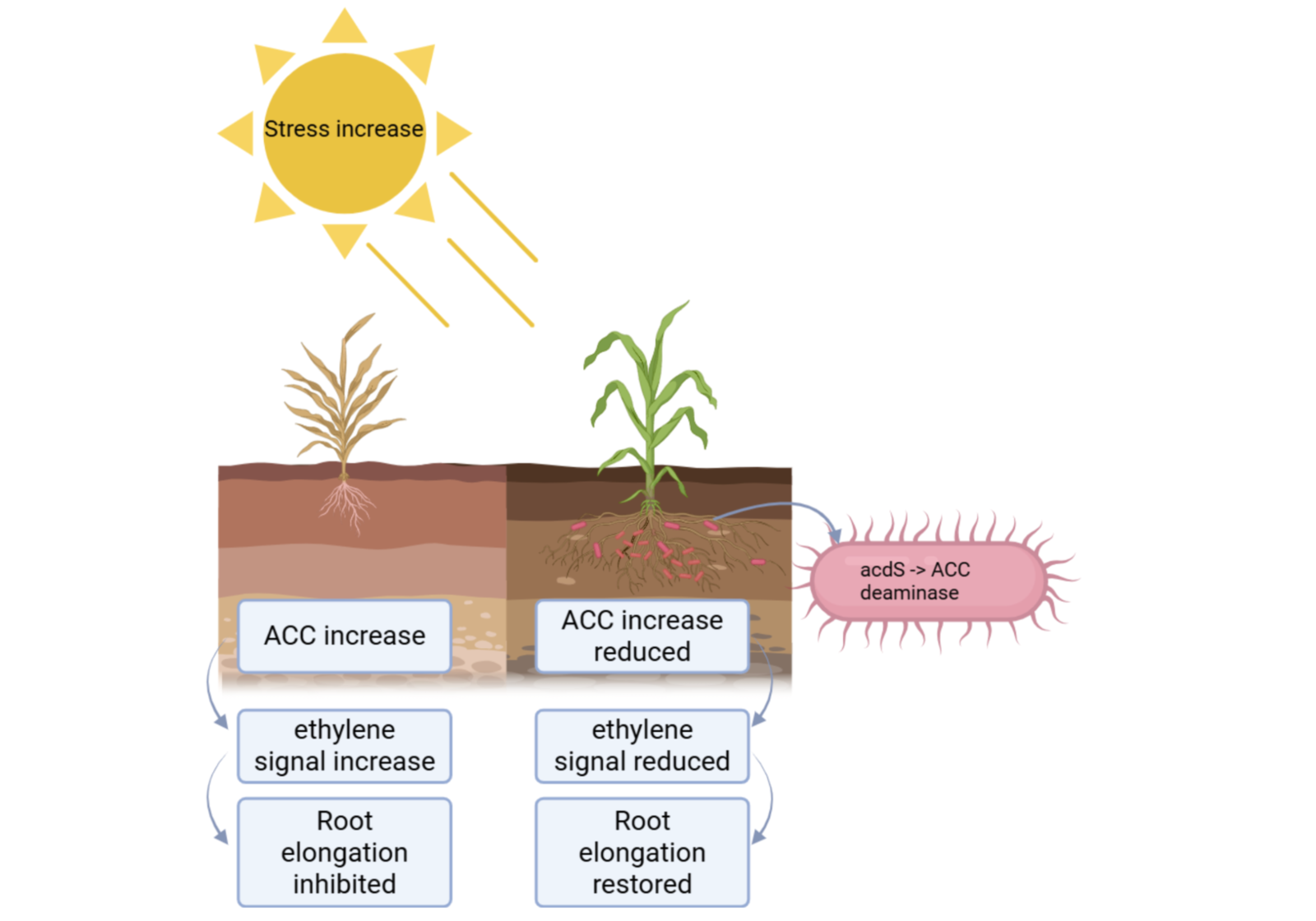 |
|---|
In summary, drought continues to threaten global food security, and existing solutions remain costly, maintenance-heavy, and inaccessible to many regions that need them the most. B. subtilis offers a safe, well-characterized chassis that naturally colonizes plant roots, and the acdS gene provides a direct biochemical route to lowering drought-induced ethylene stress. Together, these features help establish an inducible, low-cost synthetic biology system that supports root growth under drought conditions
Systems level
As mentioned before, the chassis B. subtilis was chosen for its environmental safety and biofilm-forming ability. In an open environment, the bacteria poses low risk to humans and local wildlife. As a biosafety level 1 microbe and widely found naturally in the rhizosphere, it is very safe both in the lab and more natural settings; not only is it not known to consistently cause disease, but it also benefits humans and plants (Stinoski, 2024). Our chassis will react to the presence of xylose, a simple sugar naturally released by plant roots into the surrounding soil, mediated by our PxylA promoter and the repressor XylR. When there is insufficient xylose concentration in the soil, XylR binds to the operator sequence to block transcription. Once irregular levels of xylose are detected, the system will trigger the expression of the inserted acdS gene to produce the ACC deaminase enzyme. The enzyme then targets 1-aminocyclopropane-1-carboxylate (ACC), the precursor to ethylene production, which was noted earlier as the primary difficulty presented by drought. The enzyme cleaves ACC into a-ketobutyrate and ammonia (Gamalero et al., 2023). This lowers the ethylene signal and thereby acts as a stress-relief tool, significantly reducing the ethylene signal that slows root elongation (Gamalero et al., 2023; see Figure 3).
| Figure 3. During drought, plant roots release excess ACC (yellow triangles). Our engineered bacteria (pink rods) detect this and secrete ACC deaminase (green clusters), which cleaves the ACC into alpha-ketobutyrate and ammonia. By destroying this ACC in the soil, the bacteria lower the plant's internal ethylene levels, allowing the roots to continue growing. | 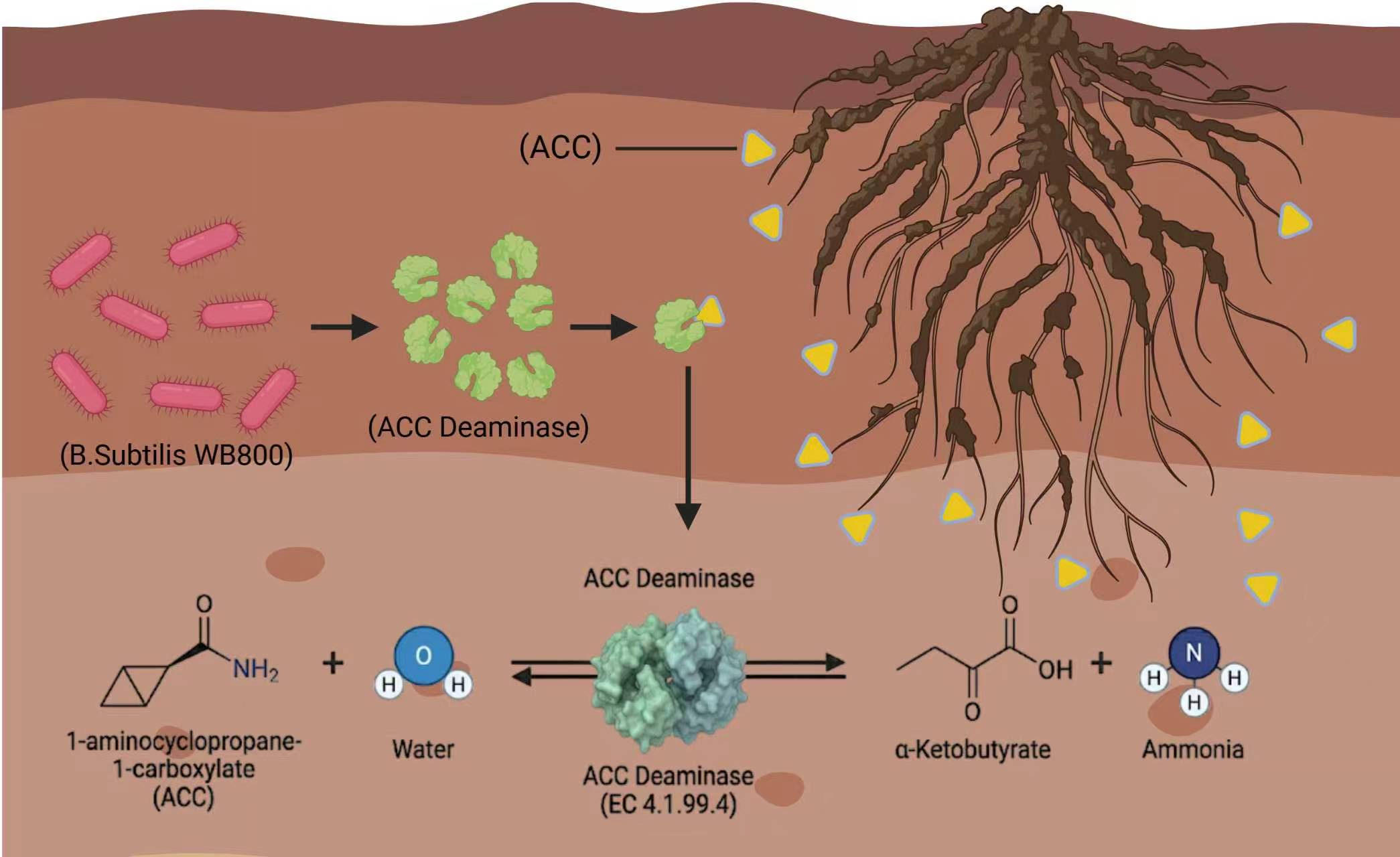 |
|---|
To establish safe and effective production of ACC deaminase, our system will also include repressors and kill switches. Our system is triggered by Xylose, the inclusion of a repressor would ensure inducible expression, Despite B. subtilis’ biosafety, our systems plan to include a kill switch, MazF, to guarantee overall security. The MazF toxin will be released under high-stress conditions in the chassis. Upon activation, the toxin cleaves mRNA in a sequence that causes cellular growth arrest (Simanshu et al., 2015).
Device level
Our project uses B. subtilis WB800 as the microbial chassis. It is optimized for protein production because it lacks eight extracellular proteases (Liang et al., 2025). As a result, WB800 will prevent the degradation of our target protein and thus increase the yield of ACC deaminase production at the plant-root interface.
The genetic circuit is controlled by the PxylA promoter and the XylR repressor. This forms an inducible regulatory system. In the absence of xylose, XylR binds to the PxylA operator and represses transcription. When xylose is present, it binds to XylR, releasing the repressor and allowing transcription of the acdS coding sequence to begin. Following the promoter is the ribosome binding site (RBS), which ensures efficient translation of the target gene. The acdS coding sequence, encoding ACC deaminase, is fused to the SP(amyE) signal peptide at the N-terminus. The device stops with a double T amyL terminator to ensure termination and prevent read through (for the whole Circuit, see Figure 4). By reducing ACC levels through inducible expression and secretion of ACC deaminase, this device lowers ethylene signaling in the host plant. Lower levels of ethylene reduce the inhibition of drought on root growth. Thus, it enhances plant growth, drought resistance, and survival.
| Figure 4. This diagram illustrates our two devices. When Xylose is introduced, it acts as an inducer and triggers a conformational change on the XylR repressor. Thus it inhibits the repressor from binding to the operator region, allowing the second device to express the acdS gene. | 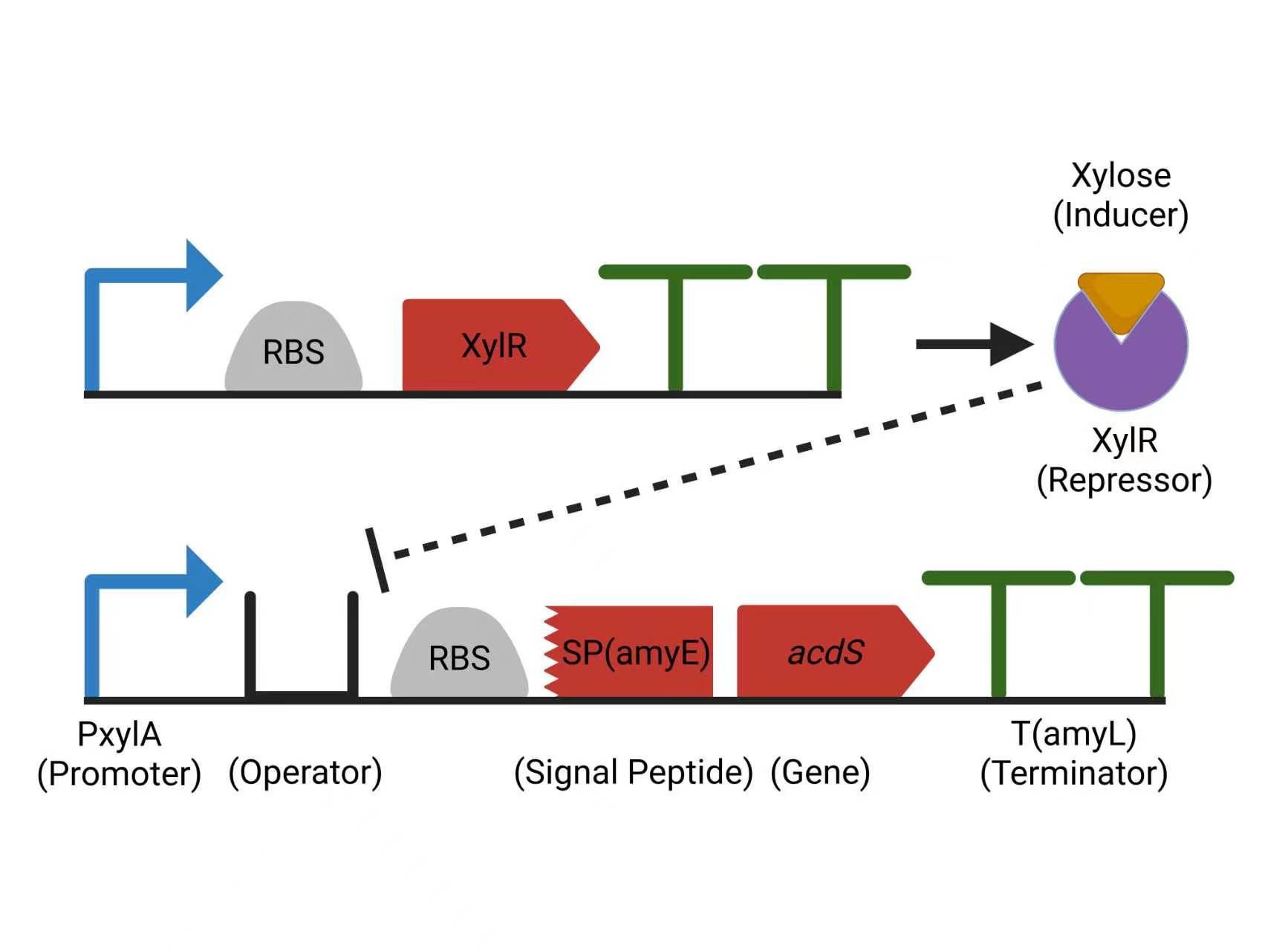 |
|---|
Parts level
PxylA promoter (BBa_K1351039)
PxylA is an xylose-inducible promoter that originates from the B. subtilis xylose operon (iGEM Team LMU-Munich, 2014). The expression of this promoter is inhibited by the XylR repressor in the absence of xylose and becomes active in its presence, leading to the expression of genes downstream. In our genetic circuit, PxylA controls acdS expression, allowing regulation of ACC deaminase synthesis via xylose induction under drought stress. This provides a conditional expression of the system rather than a constitutive expression, thereby minimizing the organism's metabolic load. In addition, the inducible system allows us to trigger drought resistance in plants during dry periods.
XylR repressor (BBa_K143036)
The PxylA promoter is controlled by the XylR-xylose regulatory system. XylR acts as a transcriptional repressor that binds the PxylA operator and prevents transcription during the low-xylose stage (iGEM Team Cambridge, 2008). The addition of xylose triggers dissociation of XylR from DNA, initiating transcription. In B. subtilis, XylR is naturally available; however, XylR overproduction increases repression efficiency and minimizes promoter leakage. On the other hand, Xylose will be purchased and added to the irrigation water as an inducer. In this design, XylR maintains acdS in the OFF state in the absence of xylose.
Ribosome binding site (BBa_K143021)
The ribosome binding site is located immediately after the PxylA promoter and before the coding region of acdS. It forms a locus that serves as the specific docking site for ribosomes, thereby helping initiate translation (iGEM Team Cambridge, 2008). The use of a strong ribosome-binding site ensures efficient translation of the transcribed mRNA into ACC deaminase upon induction. In this case, including a strong RBS improves the circuit's expression, specifically the correlation between inducible transcription and translation.
AcdS gene
The core element of the construct is the acdS gene, which encodes the enzyme deaminase (EC 4.1.99.4). ACC deaminase catalyzes the cleavage of 1-αminocyclopropane-1-carboxylate, also named ACC, into a ketobutyrate and ammonia (Gamalero et al., 2023). Because ACC is the immediate biosynthetic precursor of ethylene, lowering ACC effectively reduces ethylene concentrations in the root zone, thereby allowing root elongation under drought-induced stress ethylene (Gamalero et al., 2023). The acdS gene is naturally found in certain plant growth-promoting rhizobacteria that associate with root systems, and its expression has been linked to significant improvements in plant growth under abiotic stress conditions (Gamalero et al., 2023).
SP(amyE) signal peptide (BBa_K2273023)
To allow extracellular function, the acdS coding sequence is fused to the SP(amyE) signal peptide at its N-terminus. SP(amyE) is a native signal peptide presented in B. subtilis α-amylase(AmyE), and it directs a fused protein through the Sec secretion pathway and across the cell membrane (iGEM Team TU Dresden, 2017). After translocation, the signal peptide is cleaved by signal peptidases, releasing mature ACC deaminase into the extracellular environment. The method allows ACC deaminase to act directly in the rhizosphere, where it can interact with ACC exuded by plant roots. The use of B. subtilis WB800 is very important, as it is an eight-extracellular-protease-deficient strain, which means the secreted ACC deaminase will not be degraded by the host’s own proteases once exported (Wu et al., 2002; Nguyen et al., 2013). Therefore, this combination of SP(amyE)- directed secretion and WB800’s protease-free extracellular environment enables an extracellular approach (see Figure 5). To validate this approach and ensure the secreted ACC deaminase remains active extracellularly, our experimental protocol includes a validation step. We will measure ACC deaminase activity within the culture supernatant and compare it to intracellular expression controls, ensuring that the enzyme keeps its catalytic capabilities after secretion.
| Figure 5. Extracellular secretion of ACC deaminase via the SP(amyE) pathway. (1) The SP(amyE) signal peptide guides the newly made enzyme through the B. subtilis Sec translocon. (2) A membrane peptidase cleaves the tag, releasing the mature enzyme outside the cell. (3) The free enzyme breaks down ACC in the soil environment. (4) This targeted degradation reduces internal plant stress and restores normal root growth. | 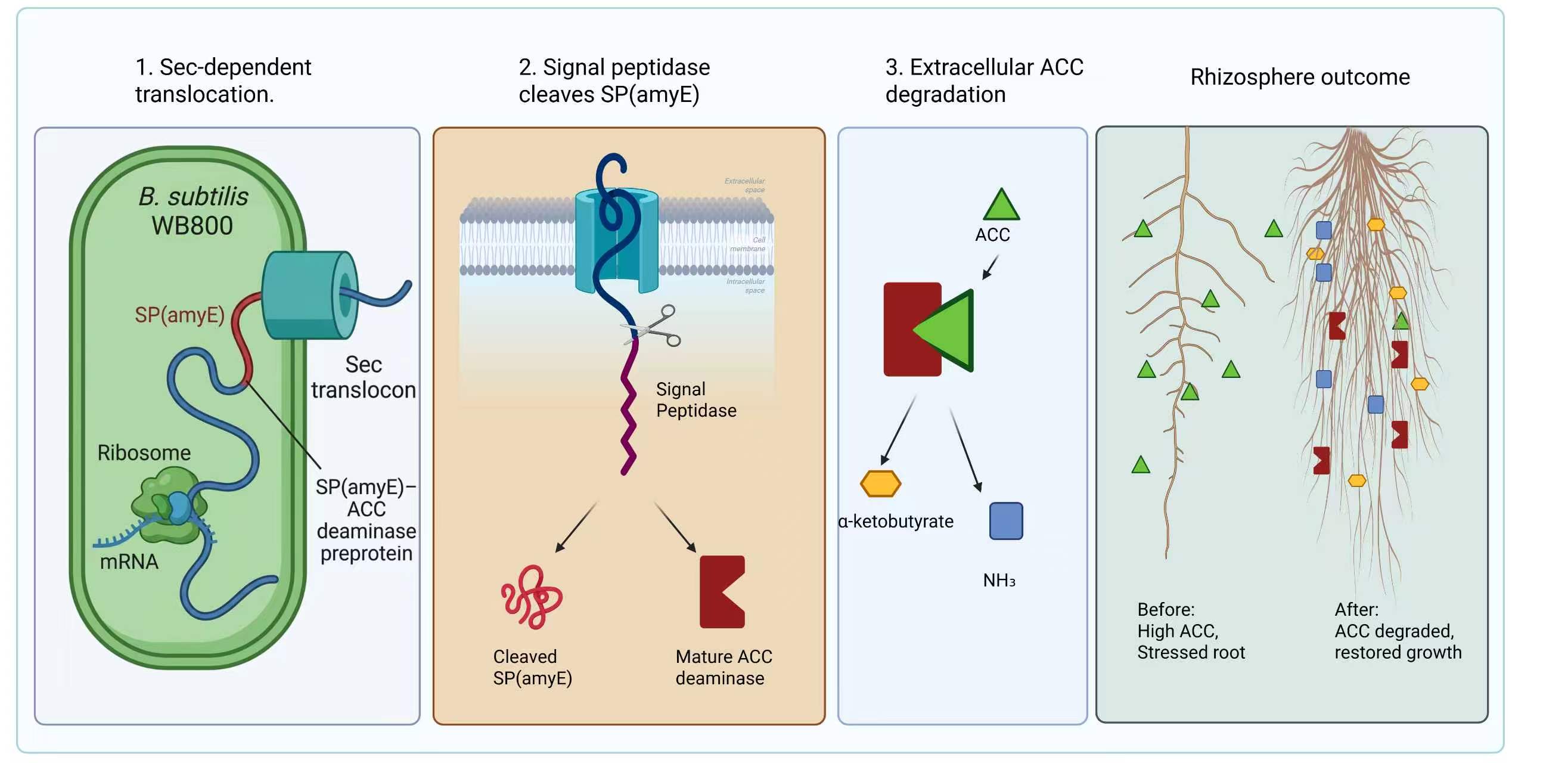 |
|---|
Double T(amyl) terminators (BBa_K823017)
Transcription of the acdS construct is terminated by two copies of T(amyl) terminator, as derived from the B. subtilis α-amylase (amyL) gene (iGEM Team LMU-Munich, 2012). The double terminators are used to ensure high-efficiency transcriptional termination, preventing read-through transcription that can interfere with the downstream chromosomal gene at the integration site, or to prevent the production of aberrant transcripts that place unnecessary metabolic burden on the cell. Therefore, T(amyl) is a good option and is compatible with the Bacillus BioBrick Box standardized part system (iGEM Team LMU-Munich, 2012).
pBS1C integrative vector (BBa_J179000)
The whole genetic construct, from the PxyIA promoter, RBS, SP(amyE)-acdS fusion, and double T(amyl) terminators, is assembled within the pBS1C integrative vector from the BioBrick Box family (iGEM Team LMU-Munich, 2013; See figure 6). pBS1C allows site-specific integration into the B. subtilis chromosome at the amyE locus via double-crossover homologous recombination. Chromosome integration provides several advantages over episomal expression such as stable inheritance, reduced plasmid loss, and lower dependence on antibiotic selection The amyE locus has a well-established neutral integration site in B. subtilis,does not disrupt essential gene functions, and its disruption serves as a convenient screen for successful integrants from starch plate assays. In addition, pBS1C also carries a chloramphenicol resistance cassette from the initial laboratory selection for transformants (iGEM Team LMU-Munich, 2013).
| Figure 6. This base vector (7,171 bp) acts as the backbone for our genetic circuit. We will insert our entire construct (PxylA promoter, RBS, SP(amyE)-acdS fusion, and terminators) into its cloning region. The pBS1C vector then integrates our circuit directly into the B. subtilis chromosome at the amyE locus, ensuring long-term stability in the soil without the need for antibiotics. | 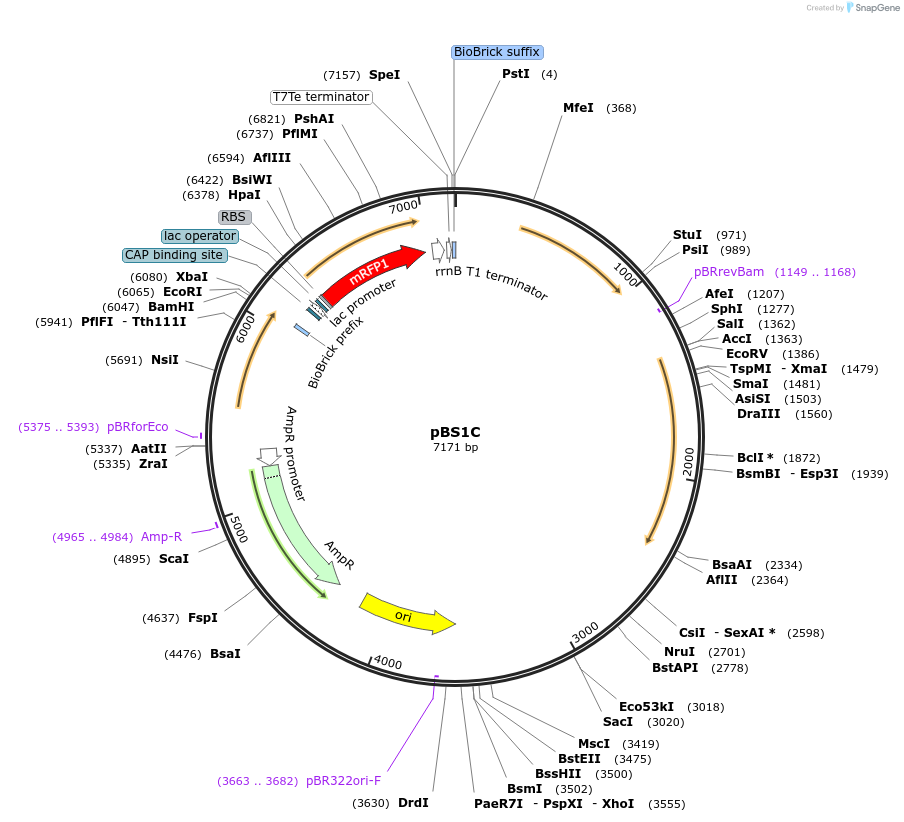 |
|---|
Safety
Our project follows standard biosafety practices and aims to minimize risks to humans or the environment. The chassis, Bacillus subtilis WB800, is a Biosafety Level 1 (BSL-1) organism with no direct capacity to cause disease in humans or animals (U.S. Environmental Protection Agency, 1997). It grows in soil and on plant roots, meaning that it already inhabits its intended environments. The acdS gene encodes ACC deaminase, an enzyme also produced by many naturally occurring soil bacteria, so its presence in the rhizosphere does not introduce a foreign function to the ecosystem (Gamalero et al., 2023).
In addition to these environmental safety considerations, we adhere to strict standards for laboratory safety. In accordance with BSL-1 guidelines, all work surfaces must be decontaminated, and waste materials must be properly disposed of. Protective equipment such as lab coats, goggles, and gloves should be worn at all times (Vanderbilt University Medical Center, n.d.). In terms of facility requirements, the lab should have sinks available for washing and the lab should remain physically separate from other areas of the building.
To minimize the risk of uncontrollable spread, the system incorporates one primary biocontainment mechanism alongside an expression control feature. The xylose-inducible PxylA promoter restricts ACC deaminase production only when xylose is present, reducing unnecessary metabolic burden and preventing constitutive expression in non-targeted environments. However, because xylose is present in the rhizosphere through plant cell wall-derived xylan breakdown (Nazari et al., 2022), this mechanism primarily functions through expression control rather than biocontainment. The MazF kill switch provides a second line of containment. MazF is an endoribonuclease that cleaves single-stranded mRNA at ACA sequences, stopping translation and inhibiting cell growth (Zhang et al., 2003). In our system, MazF is placed under a promoter responsive to a rhizosphere-specific signal, such as plant-derived exudate detection or nutrient/oxygen gradient sensing. Both distinguish the rhizosphere from the bulk soil (Nazari et al., 2022). So that the toxin is repressed in the target niche and derepressed upon dispersal. To our knowledge, no B. subtilis promoter has yet been characterized as a clean rhizosphere exit sensor, and therefore identifying or engineering one remains a prerequisite before actual deployment. Chromosomal integration via pBS1C at the amyE locus allows the construct to be maintained without plasmid-based antibiotic selection, reducing the risk of antibiotic resistance gene spreading in the soil environment (Radeck et al., 2013).
Environmental risk is low. However, B. subtilis may persist in soil beyond the intended growing season, as it naturally forms biofilms and spores (Mahapatra, 2022). Since endospores are metabolically dormant, MazF, which kills by switching off active mRNAs, would not eliminate sporulated cells, representing the known limitation of toxin-based containment in spore-forming chassis. The potential negative effects on non-target soil organisms should be tested before field use. Any environmental release of a genetically modified microorganism for agricultural use would require prior regulatory approval from agencies such as the USDA APHIS (Animal and Plant Health Inspection Service), the EPA under TSCA (Toxic Substances Control Act) for intergenic microorganisms, and NIH Guidelines for laboratory-stage work.
Discussions
The chosen chassis, Bacillus subtilis, has a varied history of use in agriculture. The bacterium has been used to enhance soil health, promote plant growth, and, most importantly, relieve plant stress. The relatively common use of B. subtilis in agricultural applications makes implementation of our solution simpler, since farmers and regulatory agencies are already familiar with using it safely. Additionally, B. subtilis is a known root colonizer, so it is a reasonable choice for delivering ACC deaminase directly in the rhizosphere (Allard-Massicotte et al., 2016). Because of its ability to form biofilm and survive under stress, B. subtilis can be used effectively for its intended purpose (Hashem et al., 2019). By working right at the plant’s roots, our engineered bacteria can deliver stress relief exactly where it is needed without wasting resources. This makes it a much cheaper and more practical option for developing regions than building massive, expensive irrigation systems.
Even with all these advantages, bringing such an innovation from the laboratory into practical use on a conventional farm poses several ecological risks. For instance, B. subtilis's sporulation ability poses a problem because the MazF kill switch will not function when the organism is in a non-active state. Since spores have an excellent survival rate in poor soils, our engineered bacteria may persist on the land well past the harvest season (U.S. Environmental Protection Agency, 1997). The issue of sporulation can, however, be addressed in future research by applying “spore-minus” mutants, which cannot sporulate regardless of conditions, thereby ensuring our kill switch is always effective (Park et al., 2017). This approach involves a trade-off because B. subtilis relies on sporulation for long-term environmental persistence; spore-minus strains may exhibit reduced field survival and colonization stability, which would need to be evaluated before deployment.
Another design consideration concerns the xylose-inducible PxyLA promoter. While designed to restrict ACC deaminase production to xylose-rich conditions, xylose is naturally released in the rhizosphere through plant xylan degradation (Nazari et al., 2022). This means the inducible control may function more as a rhizosphere localization mechanism than as a true on/off switch if not modified correctly. However, rhizosphere xylose concentrations resulting from natural plant xylan degradation are likely well below the induction threshold characterized for PxylA in laboratory media. Therefore, we frame the natural rhizosphere localization of this circuit as a hypothesis that must be experimentally tested.
Despite these concerns, our design remains highly secure in other respects. Rather than maintaining them on a plasmid, our method of genetic modification inserts the desired genes directly into the host’s chromosome at the amyE locus via the pBS1C integrative vector. This can reduce the risk of plasmid-mediated transfer of the synthetic gene to other soil bacteria (Radeck et al., 2013). However, because B. subtilis is naturally competent for DNA uptake, chromosomal genes can still be transferred through natural transformation or other mobile genetic elements, so this strategy reduces but does not eliminate the risk of horizontal gene transfer.
Next steps
Now that the design of our genetic circuit is complete, our first step is to assemble the BioBrick parts and the integrative vector using methods such as Gibson assembly or restriction digestion. Specifically, we will integrate our assembled construct directly into the B. subtilis WB800 chromosome to ensure the genes remain stable without the need for continuous antibiotic selection. Prior to plant testing, we must experimentally confirm that our inducible promoter functions correctly and that ACC deaminase is properly expressed and secreted via SP(amyE). In our design, the genetic construct turns “ON” in the presence of xylose. Since xylose is naturally present in the rhizosphere, even though it likely wouldn't be sufficient to natively induce the system, we still need to determine whether background levels are enough to trigger constitutive expression or induction actually remains controlled. To do this, we will run in vitro liquid culture assays using varying concentrations of xylose to mimic the root environment and measure the resulting enzyme activity (Beauregard et al., 2013).
Once the system’s basic functions are verified, we must experimentally demonstrate the effectiveness of our biocontainment methods to prevent environmental contamination. We will evaluate the MazF kill switch’s effectiveness by measuring bacterial growth curves before and after toxin activation. If sporulation rates are high and dormant spores survive MazF activation, additional methods—such as switching to the “spore-minus” mutant strain—would be necessary before any field use (Park et al., 2017). The core of our project will then focus on testing the effect on plant root growth in a mini drought environment. As we know, drought stimulates ethylene production, thereby inhibiting root growth. We plan to conduct a small-scale root elongation assay by inoculating seeds with our engineered B. subtilis and restricting their water supply, measuring root length relative to untreated controls to quantify the solution’s efficiency. For these subsequent actions, we will be working closely with Dr. Alberto Donayre at the Technological University of Uruguay.
Author contributions
J.Yang. conceived the project. J.H. designed the genetic circuit and selected the chassis and parts. All contributed to the abstract and background section. J.Yang. and J.H. wrote the discussion and parts sections, as well as the figures presented in the manuscript. E.W. and J.Yin wrote the systems, and device sections. E.W. wrote the safety section. J.H wrote the next step section. J.Yin and E.W. led the review and editing of all sections across the manuscript. All authors reviewed and approved the final manuscript.
Acknowledgements
We would like to thank our BioBuilder mentor, Dr. Alberto Donayre (UTEC), and our Synthetic Biology teacher, Ms. Vivien Marmerstein, for their guidance and feedback throughout this project. We also thank the Western Reserve Academy Science Department for supporting our work. Additionally we would like to thank the BioTreks program for making this project and its publication possible.
References
Advantages and Disadvantages of Subsurface Drip Irrigation. (n.d.). https://www.academia.edu/10077186/ADVANTAGES_AND_DISADVANTAGES_OF_SUBSURFACE_DRIP_IRRIGATION
Advantages and Disadvantages of Subsurface Drip Irrigation. (n.d.). https://extensionpubs.unl.edu/publication/ec776/2005/pdf/view/ec776-2005.pdf
Allard-Massicotte, R., Tessier, L., Lécuyer, F., Lakshmanan, V., Lucier, J.-F., Garneau, D., Caudwell, L., Vlamakis, H., Bais, H. P., & Beauregard, P. B. (2016). Bacillus subtilis early colonization of arabidopsis thaliana roots involves multiple chemotaxis receptors. MBio, 7(6). https://doi.org/10.1128/mbio.01664-16
Beauregard, P. B., Chai, Y., Vlamakis, H., Losick, R., & Kolter, R. (2013). Bacillus subtilis biofilm induction by plant polysaccharides. Proceedings of the National Academy of Sciences, 110(17). https://doi.org/10.1073/pnas.1218984110
Benefits of using compost. (n.d.). Environmental Protection Agency. https://www.epa.gov/sustainable-management-food/benefits-using-compost
Bhanja, E., Das, R., Begum, Y., & Mondal, S. K. (2021). Study of pyrroloquinoline quinine from phosphate-solubilizing microbes responsible for plant growth: In silico approach. Frontiers in Agronomy, 3. https://doi.org/10.3389/fagro.2021.667339
BSH Ingredients. (2025, February 10). D-Xylose Market Analysis: Trends, Key Players, Market Scale Report for 2025. BSH Ingredients. https://www.bshingredients.com/d-xylose-market-analysis/#elementor-toc__heading-anchor-0
Deng, Y. (2021). Pollution in rainwater harvesting: A challenge for sustainability and resilience of urban agriculture. Journal of Hazardous Materials Letters, 2, 100037. https://doi.org/10.1016/j.hazl.2021.100037
de Witt, M., Roets, F., & Watson, A. (2025). Review: Implementation challenges of managed aquifer recharge in developing countries. Hydrogeology Journal, 33(6), 1485-1499. https://doi.org/10.1007/s10040-025-02944-w
EM-DAT, CRED / UCLouvain – processed by Our World in Data. “Number of total people affected by drought” [dataset]. EM-DAT, CRED / UCLouvain [original data].
Errington, J., & Aart, L. T. van der. (2020). Microbe profile: Bacillus subtilis: Model organism for cellular development, and industrial workhorse. Microbiology, 166(5), 425-427. https://doi.org/10.1099/mic.0.000922
European Commission. Joint Research Centre. (2025). Drought in africa: April 2025 : GDO analytical report. Publications Office. https://doi.org/10.2760/2135988
Fatma, M., Asgher, M., Iqbal, N., Rasheed, F., Sehar, Z., Sofo, A., & Khan, N. A. (2022). Ethylene signaling under stressful environments: Analyzing collaborative knowledge. Plants, 11(17), 2211. https://doi.org/10.3390/plants11172211
Gamalero, E., & Glick, B. R. (2025). Rhizobia and non-rhizobial nodule bacteria with ACC deaminase increase both nodulation and stress resistance. Frontiers in Microbiology, 16. https://doi.org/10.3389/fmicb.2025.1662592
Gamalero, E., Lingua, G., & Glick, B. R. (2023). Ethylene, acc, and the plant growth-promoting enzyme ACC deaminase. Biology, 12(8), 1043. https://doi.org/10.3390/biology12081043
Hashem, A., Tabassum, B., & Fathi Abd_Allah, E. (2019). Bacillus subtilis: A plant-growth promoting rhizobacterium that also impacts biotic stress. Saudi Journal of Biological Sciences, 26(6), 1291-1297. https://doi.org/10.1016/j.sjbs.2019.05.004
iGEM Team Cambridge. (2008, September 16). Part:BBa_K143036. iGEM Registry of Standard Biological Parts. Retrieved April 7, 2026, from https://parts.igem.org/Part:BBa_K143036
iGEM Team Cambridge. (2008, September 17). Part:BBa_K143021. iGEM Registry of Standard Biological Parts. Retrieved April 7, 2026, from https://parts.igem.org/Part:BBa_K143021
iGEM Team LMU-Munich. (2012, September 20). Part:BBa_K823017. iGEM Registry of Standard Biological Parts. Retrieved April 7, 2026, from https://parts.igem.org/Part:BBa_K823017
iGEM Team LMU-Munich. (2013, December 3). Part:BBa_J179000. iGEM Registry of Standard Biological Parts. Retrieved April 7, 2026, from https://parts.igem.org/Part:BBa_J179000
iGEM Team LMU-Munich. (2014, October 17). Part:BBa_K1351039. iGEM Registry of Standard Biological Parts. Retrieved April 7, 2026, from https://parts.igem.org/Part:BBa_K1351039
iGEM Team TU Dresden. (2017, September 21). Part:BBa_K2273023. iGEM Registry of Standard Biological Parts. Retrieved April 7, 2026, from https://parts.igem.org/Part:BBa_K2273023
Jeong, D.-E., So, Y., Park, S.-Y., Park, S.-H., & Choi, S.-K. (2018). Random knock-in expression system for high yield production of heterologous protein in bacillus subtilis. Journal of Biotechnology, 266, 50-58. https://doi.org/10.1016/j.jbiotec.2017.12.007
Kuwayama, Y., Thompson, A., Bernknopf, R., Zaitchik, B., & Vail, P. (2018). Estimating the impact of drought on agriculture using the U.S. drought monitor. American Journal of Agricultural Economics, 101(1), 193-210. https://doi.org/10.1093/ajae/aay037
Liang, J., Liang, T., Wei, C., Li, L., Li, Y., He, S., Liao, Z., & Cui, L. (2025). CRISPR/Cas9-engineered bacillus subtilis chassis for tailored chitooligosaccharide production from marine waste chitosan. Microbial Cell Factories, 25(1). https://doi.org/10.1186/s12934-025-02881-z
Liu, Z., Lv, A., & Li, T. (2024). Intensified drought threatens future food security in major food-producing countries. Atmosphere, 16(1), 34. https://doi.org/10.3390/atmos16010034
Mahapatra, S., Yadav, R., & Ramakrishna, W. (2022). Bacillus subtilis impact on plant growth, soil health and environment: Dr. jekyll and mr. hyde. Journal of Applied Microbiology, 132(5), 3543-3562. https://doi.org/10.1111/jam.15480
Mahmood, S., Nunes, M. R., Kane, D. A., & Lin, Y. (2023). Soil health explains the yield-stabilizing effects of soil organic matter under drought. Soil & Environmental Health, 1(4).
Malloy, C. (2020, December 7). Rainwater harvesting. The Counter. Retrieved December 5, 2025, from https://thecounter.org/ancient-rainwater-harvest-technology-used-for-access-to-water-supply-navajo-nation/
Mumberg, T., Ahrens, L., & Wanner, P. (2024). Managed aquifer recharge as a potential pathway of contaminants of emerging concern into groundwater systems – A systematic review. Chemosphere, 364, 143030. https://doi.org/10.1016/j.chemosphere.2024.143030
Nariya, H., & Inouye, M. (2008). MazF, an mRNA interferase, mediates programmed cell death during multicellular myxococcus development. Cell, 132(1), 55-66. https://doi.org/10.1016/j.cell.2007.11.044
Nazari, M., Bickel, S., Benard, P., Mason-Jones, K., Carminati, A., & Dippold, M. A. (2022). Biogels in soils: Plant mucilage as a biofilm matrix that shapes the rhizosphere microbial habitat. Frontiers in Plant Science, 12. https://doi.org/10.3389/fpls.2021.798992
Nguyen, T. T., Quyen, T. D., & Le, H. T. (2013). Cloning and enhancing production of a detergent- and organic-solvent-resistant nattokinase from bacillus subtilis vtcc-dvn-12-01 by using an eight-protease-gene-deficient bacillus subtilis wb800. Microbial Cell Factories, 12(1). https://doi.org/10.1186/1475-2859-12-79
Nordahl, S. L., Preble, C. V., Kirchstetter, T. W., & Scown, C. D. (2023). Greenhouse gas and air pollutant emissions from composting. ACS Publications, 6(1).
Park, S., Kim, C., Lee, D., Song, D. H., Cheon, K. C., Lee, H. S., Kim, S. J., Kim, J. C., & Lee, S. Y. (2017). Construction of bacillus thuringiensis simulant strains suitable for environmental release. Applied and Environmental Microbiology, 83(9). https://doi.org/10.1128/aem.00126-17
Radeck, J., Kraft, K., Bartels, J., Cikovic, T., Dürr, F., Emenegger, J., Kelterborn, S., Sauer, C., Fritz, G., Gebhard, S., & Mascher, T. (2013). The bacillus biobrick box: Generation and evaluation of essential genetic building blocks for standardized work with bacillus subtilis. Journal of Biological Engineering, 7(1). https://doi.org/10.1186/1754-1611-7-29
Rao, Y., Yang, J., Wang, J., Yang, X., Zhang, M., Zhan, Y., Ma, X., Cai, D., Wang, Z., & Chen, S. (2022). Minimization and optimization of α-amylase terminator for heterologous protein production in bacillus licheniformis. Bioresources and Bioprocessing, 9(1). https://doi.org/10.1186/s40643-022-00597-1
Ringleb, J., Sallwey, J., & Stefan, C. (2016). Assessment of managed aquifer recharge through modeling—a review. Water, 8(12), 579. https://doi.org/10.3390/w8120579
Rygus, T., Scheler, A., Allmansberger, R., & Hillen, W. (1991). Molecular cloning, structure, promoters and regulatory elements for transcription of the bacillus megaterium encoded regulon for xylose utilization. Archives of Microbiology, 155(6), 535-542. https://doi.org/10.1007/bf00245346
Sakakibara, Y., Tsutsumi, K., Nakamura, K., & Yamane, K. (1993). Structural requirements of bacillus subtilis alpha-amylase signal peptide for efficient processing: In vivo pulse-chase experiments with mutant signal peptides. Journal of Bacteriology, 175(13), 4203-4212. https://doi.org/10.1128/jb.175.13.4203-4212.1993
Simanshu, D., Yamaguchi, Y., Park, J.-H., Inouye, M., & Patel, D. (2013). Structural basis of mRNA recognition and cleavage by toxin mazf and its regulation by antitoxin maze in bacillus subtilis. Molecular Cell, 52(3), 447-458. https://doi.org/10.1016/j.molcel.2013.09.006
Stephens, C., Christen, B., Watanabe, K., Fuchs, T., & Jenal, U. (2007). Regulation of d-Xylose Metabolism in Caulobacter crescentus by a LacI-Type Repressor. Journal of Bacteriology, 189(24), 8828-8834. https://doi.org/10.1128/jb.01342-07
Stinoski, M. (2024, July 24). Chapter 4: Biosafety levels (J. Parenti, Ed.). West Virginia University. Retrieved November 11, 2025, from https://www.ehs.wvu.edu/biosafety/biosafety-manual/chapter-4-biosafety-levels
Su, Y., Liu, C., Fang, H., & Zhang, D. (2020). Bacillus subtilis: A universal cell factory for industry, agriculture, biomaterials and medicine. Microbial Cell Factories, 19(1). https://doi.org/10.1186/s12934-020-01436-8
Uniprot. (2004, June 5). Q6J256 · 1A1D_VARPD. Retrieved December 8, 2025, from https://www.uniprot.org/uniprotkb/Q6J256/entry
U.S. Environmental Protection Agency, Attachment I–Final Risk Assessment of Bacillus subtilis, H.R. Doc. (1997).
Vanderbilt University Medical Center. (n.d.). Basics of biosafety level 1. https://www.vumc.org/safety/bio/biosafety-basics-level-1
Wise, C. (2023, March 6). 5 Advantages and Disadvantages of Rainwater Harvesting. Fresh water system. Retrieved November 10, 2025, from https://www.freshwatersystems.com/blogs/blog/5-advantages-and-disadvantages-of-rainwater-harvesting?
Wu, S.-C., Yeung, J. C., Duan, Y., Ye, R., Szarka, S. J., Habibi, H. R., & Wong, S.-L. (2002). Functional production and characterization of a fibrin-specific single-chain antibody fragment from Bacillus subtilis: Effects of molecular chaperones and a wall-bound protease on antibody fragment production. Applied and Environmental Microbiology, 68(7), 3261-3269. https://doi.org/10.1128/aem.68.7.3261-3269.2002
Yildirim, G., Alim, M. A., & Rahman, A. (2022). Review of rainwater harvesting research by a bibliometric analysis. Water, 14(20), 3200. https://doi.org/10.3390/w14203200
Zdeb, M., Zamorska, J., Papciak, D., & Słyś, D. (2020). The quality of rainwater collected from roofs and the possibility of its economic use. Resources, 9(2), 12. https://doi.org/10.3390/resources9020012
Zhang, J., Zhang, S., Cheng, M., Jiang, H., Zhang, X., Peng, C., Lu, X., Zhang, M., & Jin, J. (2018). Effect of drought on agronomic traits of rice and wheat: A meta-analysis. International Journal of Environmental Research and Public Health, 15(5), 839. https://doi.org/10.3390/ijerph15050839
Zhang, Y., Zhang, J., Hoeflich, K. P., Ikura, M., Qing, G., & Inouye, M. (2003). MazF cleaves cellular mRNAs specifically at ACA to block protein synthesis in escherichia coli. Molecular Cell, 12(4), 913-923. https://doi.org/10.1016/s1097-2765(03)00402-7