
Priyanka Bose, Akshay Chenna, Esther Hong, Ribhav Jha, Sarah Jiang, Alikarim Mithwani, Aamir Motiwala, Hannah Park, Saniha Shankar, Nayesha Tamhaney, Ahaan Velaga,, Lambert High School, Suwanee, Georgia, United States of America
Reviewed on 9 May 2026; Accepted on 22 June 2026; Published on 26 October 2026
With help from the 2026 BioTreks Production Team.
Atherosclerosis-caused cardiovascular disease (CVD) remains a leading cause of morbidity and mortality, affecting over 523 million people globally. Atherosclerosis is a condition in which fatty deposits build up inside the arteries, causing them to narrow and harden. This plaque development restricts blood flow, increasing the risk of heart attacks, strokes, and peripheral artery disease. Current treatments focus on reducing cholesterol levels and do not address the underlying metabolic or gut-derived causes of CVD. Recent studies have shown that trimethylamine-N-oxide (TMAO)—a compound produced when gut bacteria metabolize choline into trimethylamine (TMA)—is a key factor in plaque formation. To prevent this choline-to-TMA-to-TMAO conversion, we propose to engineer a probiotic solution that engineers Lactobacillus plantarum, a common gut bacterium from the Lactobacillus family, to express the enzymes choline dehydrogenase (CHDH) and betaine aldehyde dehydrogenase (BADH). CHDH and BADH will be expressed in a single plasmid and will convert choline to betaine (a beneficial nutrient), a native pathway already present in humans. Because this plasmid is being expressed in a probiotic, it will allow for safe and effective delivery through yogurt, kefir, and other supplements. This food-based delivery would require regulation, testing, and containment before being released for use. When the choline-to-betaine mechanism is amplified, instead of metabolizing into TMA/TMAO, choline will be redirected into betaine, subsequently decreasing plaque buildup.
Keywords: Atherosclerosis, choline dehydrogenase, betaine aldehyde dehydrogenase, Lactobacillus plantarum, choline determination, betaine determination
Authors are listed in alphabetical order. Catherine Sharer mentored the group. Please direct all correspondence to mailto:f19723@forsythk12.org.

Background
Atherosclerosis is a disease where plaque builds up in the arteries (Figure 1). It serves as the leading cause of cardiovascular diseases, contributing to over 50% of all deaths in the Western world (Pahwa, 2023). Its correlation with low-density lipoproteins (LDLs) and plaque generation along arterial walls contributes to the hardening and shrinking. As arteries narrow, blood flow becomes restricted, reducing the delivery of oxygen to tissues. Without proper blood flow, one is at risk for various conditions and life-threatening diseases such as Peripheral Artery Disease, Chronic Venous Insufficiency, Renal Artery Disease, etc.
| Figure 1: Plaque buildup is created by overconsumption of choline dense foods like milk and eggs. The proposed solution, the insertion of an engineered plasmid into yogurt which would then be consumed, would reduce the amount of plaque. | 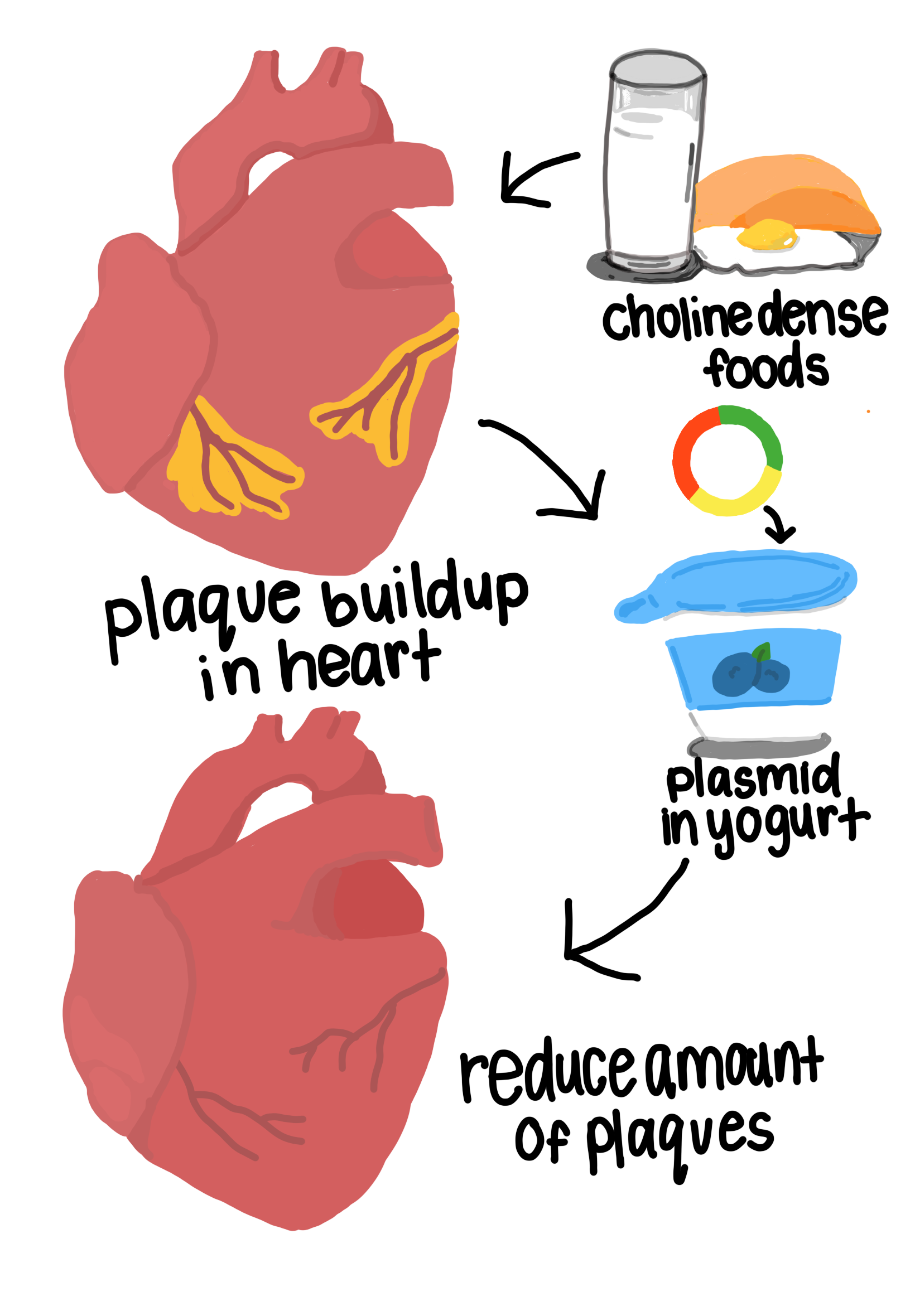 |
|---|
While current treatments aim to reduce cholesterol levels and mitigate risks for blood clots, they still remain extremely limited in terms of addressing the root cause. In particular, these approaches fail to address the underlying metabolic pathways that contribute to plaque formation.
One pathway of key interest is choline, an essential dietary nutrient metabolized by the gut microbiome. Choline is recognized as a precursor to metabolites that can influence plaque formation in arterial walls (Zhu et al., 2020). After digestion, choline is broken down by gut bacteria into trimethylamine (TMA). TMA is then absorbed into the bloodstream and transported to the liver, where it is converted into trimethylamine-N-oxide (TMAO). Elevated TMAO levels have been associated with cholesterol accumulation in artery walls, and they accelerate the transformation of macrophages into foam cells, which progress into atherosclerotic plaque over time (Gatarek & Kaluzna-Czaplinska, 2021).
Because gut bacteria play a central role in the conversion of choline to TMA, modifying the gut microbiome serves as a means of reducing levels of TMAO production. Lactobacillus is a probiotic genus recognized for its beneficial health effects on microbial balance within the intestines. Rather than allowing the precursor to TMAO formation, the choline to TMA pathway, L. plantarum can be engineered to convert choline into a more neutral molecule, betaine. Betaine is a naturally occurring compound utilized by the human body in several essential physiological processes–regulating homocysteine levels, supporting liver function, and aiding in cardiovascular health (Arumugam et al., 2021). Because betaine is already naturally produced from choline metabolism and safely used by the human body, redirecting choline towards betaine conversion can provide a more favorable alternative to TMA and TMAO production for cardiovascular health and protection. Such a pathway highlights the potential of leveraging engineered probiotics to redirect choline metabolism and reduce TMAO production as a novel strategy for preventing atherosclerosis.
Systems level
The system operates as a genetically engineered probiotic platform in which L. plantarum serves as a delivery and metabolic chassis for redirecting choline metabolism within the gut microbiome. The system integrates genetic and metabolic components to reduce trimethylamine (TMA) production and, consequently, trimethylamine-N-oxide (TMAO), which are both associated with atherosclerosis (Figure 2).
| Figure 2: L. plantarum serves as the delivery organism, where the plasmid containing the BADH and CHDH gene are inserted, which helps transform choline into betaine, which is more beneficial for the body. Lactobacillus is then inserted into yogurt for consumption, as yogurt already contains species of Lactobacillus. | 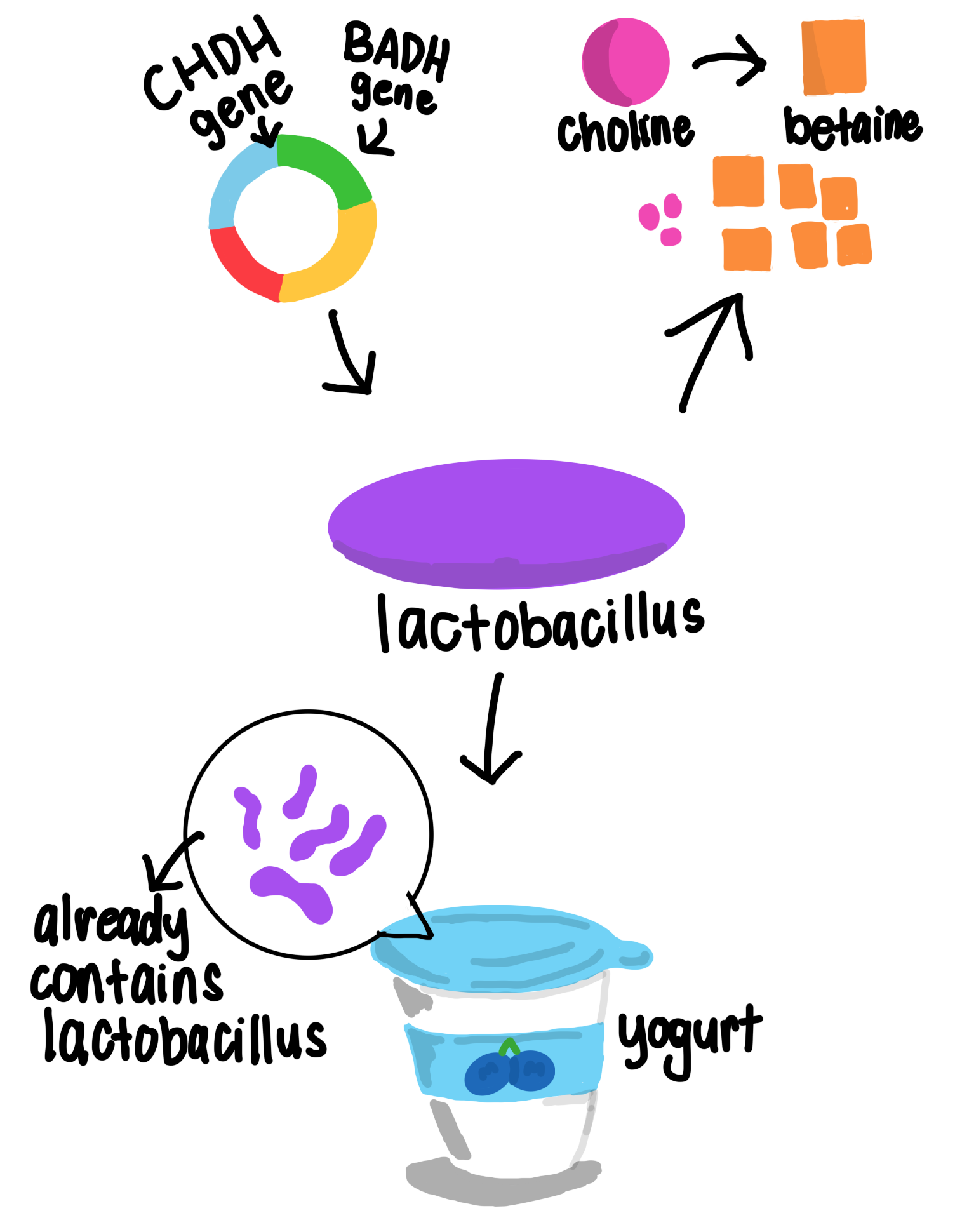 |
|---|
At the genetic level, L. plantarum is transformed with a recombinant plasmid containing the genes that code for choline dehydrogenase (CHDH) and betaine aldehyde dehydrogenase (BADH), which are existing enzymes in the human gut that are involved with metabolic processes. These enzymes help catalyze the reaction of turning choline into betaine, and this reaction is native to humans. This sustained expression ensures that the engineered bacteria can properly compete for choline regardless of environmental variability. High expression of CHDH and BADH would heighten rates of choline conversion, however could create a level of metabolic burden for L. plantarum.
At the metabolic level, the system redirects choline through an alternative oxidation pathway, converting it into the chemical betaine, an osmolyte that protects cells from stress (Craig, 2004). By increasing the rate at which choline turns into betaine, the system reduces the availability of choline to TMA-producing bacteria. This approach effectively shifts the standard metabolic activity at the community level by redirecting choline into compounds more beneficial to the body.
L. plantarum then serves as a competitive probiotic chassis at the microbiome level, as it has a survivability rate in gastrointestinal conditions of 70%-90% (Chen et al., 2025). Its enhanced metabolic activity provides an advantage in choline utilization, and may help compete with other bacteria in the gut.
Additionally, the system is designed for practical delivery through probiotic-rich foods such as yogurt, where L. plantarum is commonly found. This enables continuous introduction of the engineered bacteria into the gut, maintaining their function over a long period of time.
Overall, this system operates as a living therapeutic that reshapes microbial competition and metabolic activity at the source, providing a targeted and integrated strategy for lowering atherosclerosis risk.
Device level
The main synthetic biological component of our solution is the designed plasmid that is meant to be expressed by L. plantarum. This plasmid’s backbone is pSIP403, acquired from Addgene. This backbone is known to have high-level gene expression, specifically in the L. plantarum and Lactobacillus sakei strains (Sørvig et al., 2005). However, the desired overexpression cannot be fully achieved because the promoter is inducible. The gut microbiome in humans is intensely competitive, and the choline-to-TMAO pathway bacteria must be competed with (Coyte & Rakoff-Nahoum, 2019). This requires more expression of the genes of interest. Instead of induced expression, strong constitutive expression will express the genes of interest at a higher rate, therefore maximizing the competitiveness of our transformed bacteria against the native gut bacteria. To achieve such higher, growth-linked expression regardless of inducer cost and variability, sppA, the original promoter found native to the backbone, has been replaced by a PGM promoter (a strong, constitutive promoter commonly used for high-level gene expression in bacteria, particularly Lactobacillus) (Part A, Figure 3). The article “Constitutive expression and cell-surface display of a bacterial β-mannanase in Lactobacillus plantarum” describes two strong constitutive promoters were used to replace the original inducible promoter in the lactobacillal pSIP backbones (Nguyen et al., 2019). This literature suggests that growth-linked expression of target enzymes will enable L. plantarum to have the greatest efficacy in metabolizing choline into betaine. The ribosomal binding site (Part B, Figure 3) allows the ribosome to bind to the plasmid to initiate translation, and there is one preceding each gene, making certain that both enzymes will be translated. The linker sequence (Part D, Figure 3) ensures smooth, continual reading of the plasmid. The main components of the plasmid are the two genes of interest, choline dehydrogenase and betaine aldehyde dehydrogenase. The terminator stops transcription. The Erythromycin resistance helps eliminate all the L. plantarum that have not been transformed, acting as a selection marker that only leaves transformed bacteria in the culture. Antibiotic resistance markers would be removed or replaced in future probiotic use.
| Figure 3: The overall design of the plasmid including labeled parts. | 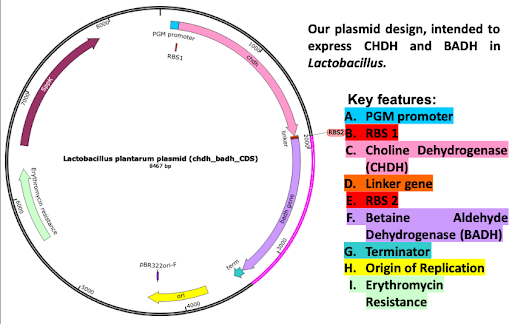 |
|---|
The enzymes choline dehydrogenase and betaine aldehyde dehydrogenase were chosen for several reasons. Both catalyze reactions that occur endogenously in human cells, which reduces the likelihood that the expressed proteins will elicit immune-mediated recognition or inflammatory responses in the intestinal mucosa. The two genes work in tandem to carry out a biosynthetic process that converts choline into betaine. The CHDH gene begins to work by oxidizing the choline present in the body into betaine aldehyde. This process immediately triggers the second process, which includes BADH oxidizing the betaine aldehyde into betaine (Figure 4).
| Figure 4: The plasmid transforms L. plantarum and also allows the choline to be transformed to betaine. | 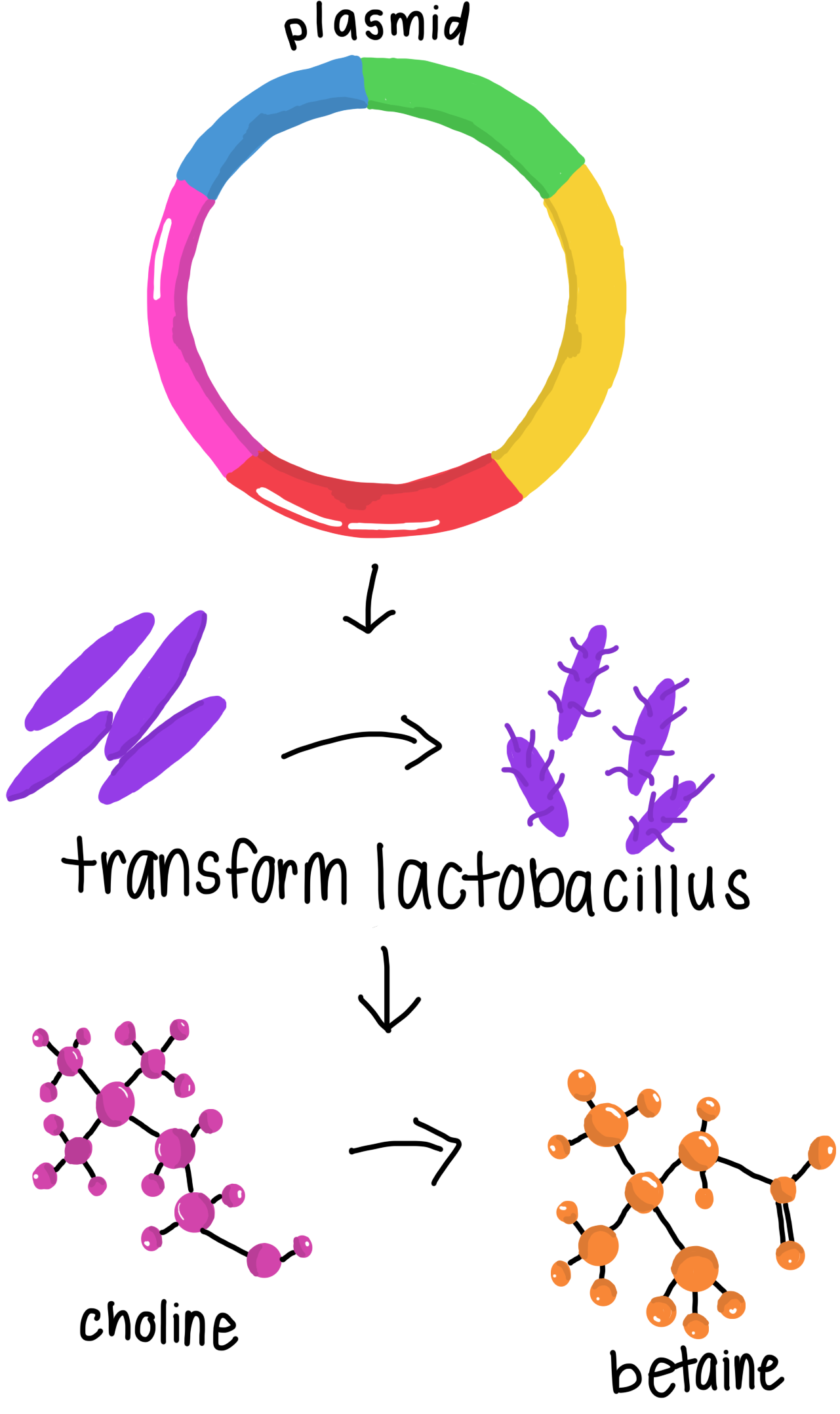 |
|---|
Parts level
General procedure
Prepare bacterial sample
Grow an E. coli culture
Transfer culture to centrifuge tubes and centrifuge
Record the weight of the E. coli or L. plantarum sample
Extract choline & betaine
Break open E. coli or L. plantarum (vortex & heat) to extract compounds
Centrifuge to remove debris
Collect extract
Adjust pH ≈ 1 and dilute to a known value
Split the extract into two parts
Total (Choline & Betaine)
Take aliquot
Add ammonium reineckate
Incubate at 4°C for 2 h
Filter, wash, and dry crystals
Measure absorbance at 526 nm
Choline only
Take a second aliquot
Adjust to pH 8-9
Add ammonium reineckate
Repeat the same steps (cool, filter, dissolve, measure)
Calculate
Choline = absorbance (alkaline sample)
Betaine = (total – choline)
The experimental system is designed to convert choline into betaine using genetically modified Escherichia coli, quantifying the resulting betaine using a Reinecke’s salt-based spectrophotometric assay. Because access to the L. plantarum species is limited, using E. coli as a model organism is a more accessible and sustainable experiment.
The construction of the plasmid involves modifying a pET-based expression vector to include genes responsible for the oxidation of choline into betaine. The plasmid backbone is engineered to optimize protein expression in E. coli.
Although the intended application organism for this system is L. plantarum, the experimental validation is carried out using E. coli. This decision is based on the difference in accessibility and experimental efficiency between the two organisms. E. coli serves as a model host due to its rapid growth rate, well-characterized genetics, and high compatibility with common expression vectors such as pET plasmids. These features allow for efficient plasmid construction, transformation, and protein expression, making it ideal for initial testing of the engineered system. E. coli is used to validate that the engineered plasmid successfully enables the conversion of choline into betaine. Once functionality is confirmed, the system can be adapted for expression in L. plantarum later on.
The experiment begins with the transformation of a recombinant plasmid into E. coli cells using electroporation. Since the plasmid contains an ampicillin resistance gene, the transformed cells will be plated on a medium containing ampicillin to ensure that only successfully transformed bacteria survive.
Once expression is induced, choline is added to the bacterial culture as the substrate. The engineered E. coli cells produce enzymes that catalyze the conversion of choline into betaine over a fixed incubation period. After incubation, the culture is centrifuged to separate the bacterial cells from the surrounding medium, and the supernatant containing soluble choline and betaine is collected for analysis.
This extract is then divided into two equal portions for differential measurement. One portion is adjusted to acidic conditions (pH ~ 1), while the other is adjusted to a mildly alkaline range (pH ~ 8-9). Ammonium Reinecke’s salt (Hervin et al., 2023) is added to both samples to form a pink colored precipitate. This particular assay allows for a colored precipitate to form (in this case, pink) that allows for choline and betaine to be estimated spectrophotometrically. This procedure is accessible especially for high school labs, however it is less specific than high performance liquid chromatography (HPLC). Because HPLC is only available in university and professional labs, we cannot use it. In the future however, it could provide more accurate data. The precipitates are collected by filtration, washed with cold solvent to remove impurities, and dissolved in acetone for analysis. Dissolution in acetone is necessary because spectrophotometric measurement requires a solution rather than a solid, as undissolved particles would scatter light and distort absorbance readings.
Absorbance is measured using a spectrophotometer at approximately 525 nm. Betaine concentration is determined by comparing the two conditions. The acidic sample represents the combined signal of choline and betaine, while the alkaline sample only reflects choline. The difference between these absorbance values is used to calculate betaine concentration based on a calibration curve generated from known standards.
This approach to quantifying both betaine and choline concentrations simultaneously using a Reinecke’s salt-based spectrophotometric assay was described by Valdés Martínez (1983). This method was chosen because it is relatively simple, and it does not require advanced analytical instrumentation such as high-performance liquid chromatography (HPLC).
Safety
Because safety is a central concern in the development of engineered biological systems, the proposed design incorporated multiple strategies to minimize risk. All genetic modifications will take place under standard biosafety level 1 (BSL-1) conditions, using proper sterile techniques and waste disposal protocols to prevent contamination and unintended exposure. To reduce the risk of horizontal gene transfer, the use of antibiotic resistance markers during plasmid construction will be confined to laboratory use and replaced with safer alternatives in applied settings (Nguyen et al., 2011). Additionally, biological containment strategies such as genetic kill switches can be implemented to prevent survival outside the gastrointestinal environment. A certain threshold of choline absence would trigger this kill switch. Choline is an essential nutrient, so tests to determine the amount of choline specifically depleted in relation to essential choline levels would be necessary to quantify. These numbers would directly work with regulation of the plasmid to ensure that the host maintains essential choline levels. Together, these design choices ensure that the system can be safely constructed, tested, and applied with minimal risk to users and the environment. In addition, the final product, a probiotic deliverable in food that contains native Lactobacillus would need to undergo compulsory containment as well as multiple clinical trials regarding dosage control, gut resistance, reversability, and other risk factors. These would be regulated primarily with the Food and Drug Administration (FDA).
Discussions
The proposed engineered L. plantarum system represents a potential probiotic-based approach for reducing atherosclerosis risk by targeting gut-derived choline metabolism before TMA and TMAO can be produced. Unlike current treatments, which focus on the lowering of cholesterol levels after a threshold has been met, this system focuses on the early intervention and prevention of the buildup of choline by oxidation into betaine (a naturally occurring metabolite involved in human metabolic pathways). However, several limitations must be addressed before the system can be considered practical. The plasmid must be shown to express CHDH and BADH efficiently without creating a burden on the bacteria. In addition, the engineered strain must demonstrate measurable choline depletion and betaine production compared with different experimental groups. Lastly, because betaine accumulation and excessive choline depletion could create unintended effects, future versions of the system may require regulation through a riboswitch or other control mechanism. Reinecke’s salt assays may provide an accessible first screening method, but more specific analytical methods, such as HPLC, would be needed to confirm accurate choline and betaine levels.
Next steps
To further develop our system, experimental steps can be completed in our own high school lab. The first priority would be constructing and sequence-verifying the choline-to-betaine plasmid, then testing the finished construct in an accessible host such as E. coli before transferring it into L. plantarum. Once assembled, transformed cells can be grown in choline-containing media and tested for conversion efficiency over time by monitoring both choline depletion and betaine formation. A practical test would be the differential Reinecke’s salt assay, which distinguishes total choline-plus-betaine from choline alone under acidic and alkaline conditions, followed by Liquid Chromatography confirmation of the strongest samples (Martínez, 1983; Mar et al., 1995). After proof of conversion is obtained, the optimized plasmid can be introduced into L. plantarum by electroporation, and transformants can be compared for expression and plasmid stability (Alegre et al., 2004; Blanch-Asensio et al., 2023). Subsequent experiments will assess growth fitness, choline consumption kinetics, and competitive behavior against TMA-producing strains under simulated intestinal conditions. Long-term goals include in vivo validation in a murine atherosclerosis model and assessment of TMAO suppression as a function of engineered probiotic dosage.
Author contributions
HP was the sole author for the abstract, SS and RJ were the authors of the background, AV and SJ were the authors of the system level, HP and PB were the authors of the device level, SJ and NT were the authors of the parts level, AM was the sole author of safety, AC and AM were the authors of Discussions, AC was the sole author of next steps, EH was the sole author of the graphics used.
Acknowledgements
We would like to acknowledge Mrs. Catherine Sharer for her incomparable support and guidance throughout this whole process, and her aid with our abstract, poster, presentation, and wet lab experiment. We would also like to acknowledge Ms. Kelly Teitel from the Massachusetts Institute of Technology for also providing guidance with conceptualization and editing.
References
Arumugam, M. K., Paal, M. C., Donohue, T. M., Jr, Ganesan, M., Osna, N. A., & Kharbanda, K. K. (2021). Beneficial Effects of Betaine: A Comprehensive Review. Biology, 10(6), 456. https://doi.org/10.3390/biology10060456
Berthier, F., Zagorec, M., Champomier-Vergès, M., Ehrlich, S. D., & Morel-Deville, F. (1996). Efficient transformation of Lactobacillus sake by electroporation. Microbiology, 142(5), 1273–1279. https://doi.org/10.1099/13500872-142-5-1273
Chen, Z., Cheng, Q., Zhang, X., Sheng, Z., Shi, L., & Zhang, Y. (2025). Lactiplantibacillus plantarum P16 mitigated murine colitis through modulation of immune response and gut microbiota. AMB Express.
https://pmc.ncbi.nlm.nih.gov/articles/PMC12894483/
Choline. (2020, August 11). The Nutrition Source. https://nutritionsource.hsph.harvard.edu/choline/
Coyte, K. Z., & Rakoff-Nahoum, S. (2019). Understanding Competition and Cooperation within the Mammalian Gut Microbiome. Current biology : CB, 29(11), R538–R544. https://doi.org/10.1016/j.cub.2019.04.017
Hervin, E., Mendoza, Rodriguez, M., & Migo, V. (2023). Modified Reinecke’s salt spectrophotometric method for quantifying choline chloride in feed additive. 16(02). https://scienggj.org/2023/SciEnggJ%202023-vol16-no02-p337-345-Mendoza%20et%20al.pdf
Heyde, S. A. H., & Nørholm, M. H. H. (2021). Tailoring the evolution of BL21(DE3) uncovers a key role for RNA stability in gene expression toxicity. Communications biology, 4(1), 963. https://doi.org/10.1038/s42003-021-02493-4
Kolesnik, O. (2024, January 17). HPLC Method for Analysis of Trimethylglycine (Betaine) on Primesep 100 Column. SIELC Technologies. https://sielc.com/hplc-method-for-analysis-trimethylglycine
Mar, M. H. H., Ridky, T. W., Garner, S. C., & Zeisel, S. H. (1995). A method for the determination of betaine in tissues using high performance liquid chromatography. The Journal of Nutritional Biochemistry, 6(7), 392–398. https://doi.org/10.1016/0955-2863(95)80008-z
Martinez, S. E. V. (1983). Simultaneous determination of choline and betaine in some fish materials. The Analyst, 108(1290), 1114. https://doi.org/10.1039/an9830801114
Nakamura, E., Maekawa, K., Saito, Y., Matsumoto, T., Ogawa, M., Komohara, Y., Asada, Y., & Yamashita, A. (2023). Altered choline level in atherosclerotic lesions: Upregulation of choline transporter-like protein 1 in human coronary unstable plaque. PLOS ONE, 18(2), e0281730. https://doi.org/10.1371/journal.pone.0281730
Nedkoff, L., Briffa, T., Zemedikun, D. T., Herrington, S., & Wright, F. J. (2023). Global Trends in Atherosclerotic Cardiovascular Disease. Clinical Therapeutics, 45(11). https://doi.org/10.1016/j.clinthera.2023.09.020
Nguyen, H. M., Pham, M. L., Stelzer, E. M., Plattner, E., Grabherr, R., Mathiesen, G., Peterbauer, C. K., Haltrich, D., & Nguyen, T. H. (2019). Constitutive expression and cell-surface display of a bacterial β-mannanase in Lactobacillus plantarum. Microbial cell factories, 18(1), 76. https://doi.org/10.1186/s12934-019-1124-y
Pahwa, R., & Jialal, I. Atherosclerosis. [Updated 2023 Aug 8]. In: StatPearls [Internet]. Treasure Island (FL): StatPearls Publishing; 2026 Jan-. Available from: https://www.ncbi.nlm.nih.gov/books/NBK507799/
Rivoira, L., Studzińska, S., Szultka-Młyńska, M., Bruzzoniti, M. C., & Buszewski, B. (2017). New approaches for the extraction and determination of betaine from Beta vulgaris samples by hydrophilic interaction liquid chromatography-tandem mass spectrometry. Analytical and Bioanalytical Chemistry, 409(21), 5133–5141. https://doi.org/10.1007/s00216-017-0461-0
Romano, K. A., Martínez-del Campo, A., Kasahara, K., Chittim, C. L., Vivas, E. I., Amador-Noguez, D., Balskus, E. P., & Rey, F. E. (2017). Metabolic, Epigenetic, and Transgenerational Effects of Gut Bacterial Choline Consumption. Cell Host & Microbe, 22(3), 279-290.e7. https://doi.org/10.1016/j.chom.2017.07.021
Salvi, F., & Gadda, G. (2013). Human choline dehydrogenase: Medical promises and biochemical challenges. Arch Biochem Biophys, 537(2), 243–252. https://doi.org/10.1016/j.abb.2013.07.018
Sørvig, E., Mathiesen, G., Naterstad, K., Eijsink, V. G. H., & Axelsson, L. (2005). High-level, inducible gene expression in Lactobacillus sakei and Lactobacillus plantarum using versatile expression vectors. Microbiology, 151(7), 2439–2449. https://doi.org/10.1099/mic.0.28084-0
Velasco-García, R., Villalobos, M. A., Ramírez-Romero, M. A., Mújica-Jiménez, C., Iturriaga, G., & Muñoz-Clares, R. A. (2005). Betaine aldehyde dehydrogenase from Pseudomonas aeruginosa: cloning, over-expression in Escherichia coli, and regulation by choline and salt. Archives of Microbiology, 185(1), 14–22. https://doi.org/10.1007/s00203-005-0054-8
Zhai, T., Wang, P., Hu, X., & Zheng, L. (2022). Probiotics Bring New Hope for Atherosclerosis Prevention and Treatment. Oxidative Medicine and Cellular Longevity, 2022, 1–13. https://doi.org/10.1155/2022/3900835