
Arpitha Bepeta, Tejaswi Bhimini, Grace Han, Alisha Jyotiprakash, Rachita Kawale, Sruti Lekkala, and Navya Neelam, Lambert High School, Suwanee, Georgia, United States of America
Reviewed on 9 May 2026; Accepted on 22 June 2026; Published on 26 October 2026
With help from the 2026 BioTreks Production Team.
Melioidosis is a highly consequential infectious disease that affects an estimated 165,000 individuals worldwide. This disorder is characterized by systemic lesions, pneumonia, Gram-negative sepsis, and multi-organ failure within both its chronic and acute variants. Additionally, current diagnostic methods rely on the bacterial culturing of clinical biofluids, therefore resulting in a diagnostic delay that can outpace disease progression. In recognition of this issue, our project proposes the creation of a diagnostic assay based on the existing LANCET framework— a system that combines CRISPR-Cas12a detection, proximity-dependent ligation (PDL) assays, and recombinase polymerase amplification (RPA) techniques to non-invasively detect Lyme disease—for specific, rapid, and effective diagnosis. Within this research, we aim to utilize BipD, a Burkholderia pseudomallei-specific protein essential for pathogenesis, along with two high-affinity single-stranded DNA (ssDNA) aptamers to create an amplifiable molecular signal that can be effectively detected pre-fulmination. So far, we have computationally modeled different ssDNA aptamers listed in the literature that were found to have high binding affinities with BipD. After utilizing AlphaFold-3 software to model tertiary structures and RNAFold and EZassay to model secondary structures in order to develop RPA primers and monitor dimerization, we selected AptBipD1 and AptBipD13. Although we have no major conclusions so far, it has been discovered that the two aforementioned aptamers are likely best for the development of our assay. Further in silico validation and assay design is necessary before hands-on experimentation.
Keywords: Melioidosis, Burkholderia pseudomallei, BipD, RPA, diagnostic
Authors are listed in alphabetical order. Nick Godzik mentored the group. Please direct all correspondence to mailto:f19723@forsyth.k12.ga.us.

Background
Melioidosis is a high-consequence infectious disease that primarily affects lower-income tropical regions across the globe. This disease often resembles other respiratory illnesses such as “pneumonia, tuberculosis, and pyoderma,” leading to a misidentification that impedes clinical diagnosis (Gassiep et al., 2025). Its vector, Burkholderia pseudomallei, is a soil-dwelling and Gram-negative anaerobic bacterium that is said to be “remarkably adaptive” due to its ability for both antibiotic and environmental resistance (Ibrahem et al., 2025). Especially as B. pseudomallei can be diffused through multiple forms of contact, various natural disasters, and a wide scope of human activities, many challenges have been posed for both public health and infection control, particularly within developing countries (Mohapatra & Behera, 2025; Ibrahem et al., 2025). Combined with its necessity for prolonged treatment, unpredictable clinical presentation, and renowned endemicity toward tropical and subtropical regions, both melioidosis and its vector prove to be incredibly dangerous to human health.
Current “gold-standard” laboratory identification for this disease relies entirely on axenic culture from clinical biofluids, resulting in low-sensitivity results, high incubation times, and potential misidentification (Gassiep et al., 2025). As a result, diagnosis can occur after symptoms have advanced, resulting in a diagnostic delay that can outpace disease progression. This delay can be incredibly problematic in rural areas, where the most affected population comprises individuals most susceptible to exposure to soil, water, or air contaminated by B. pseudomallei (Mohapatra & Behera, 2025). Globally, melioidosis has resulted in an estimated 165,000 human cases and 89,000 deaths each year, excluding those that have been largely underreported (Kaewrakmuk et al., 2023).
These limitations only emphasize the need for a diagnostic method that is not only accurate but rapid in settings where melioidosis is most prevalent. Our team plans to adapt a framework from LANCET—a diagnostic platform originally developed for the specific, rapid, and effective detection of Lyme disease—but modified to detect BipD, a needle-tip virulence protein in the type III secretion system of B. pseudomallei (Selvam et al., 2021; Nan et al., 2024). BipD primarily helps B. pseudomallei survive inside cells by hijacking the host cell’s E3 ubiquitin ligase complex, which eventually facilitates mitophagy through the autophagy pathway to reduce the production of mitochondrial reactive oxygen species (Nan et al., 2024). This allows the pathogen to persist intracellularly, contributing to its danger and longevity. Because BipD is closely linked to the pathogen’s ability to survive and cause infection, it serves as a strong biomarker for early detection—a key component of LANCET.
Our design starts with two aptamers, AptBipD1 and AptBipD13, interacting with BipD to eventually generate a quantifiable molecular signal that can be rapidly amplified and detected. Utilizing a mixture of proximity-dependent ligation (PDL), recombinase-polymerase amplification (RPA), and lateral flow assay (LFA) techniques, this strategy is intended to improve the speed, specificity, and accessibility of melioidosis diagnosis, particularly in settings where current methods are ineffective or rapid methods are inaccessible.
Systems level
This project aims to construct a minimally invasive, specific, and rapid diagnostic blood test to detect the presence of melioidosis. It follows a structured chronological workflow derived from LANCET, a validated system with a similar purpose as this design, for efficiency and reliability. This is largely because the vector B. pseudomallei is able to spread into the bloodstream when entered into the body, resulting in severe adversities such as blood infections that affect organs and disseminate the disease throughout the infected individual (Verma et al., 2026). Reliably detecting the presence of the crucial virulence protein BipD through a blood sample will both enable direct access to the biomarker and allow for early detection before fatal symptoms arise.
After the sample is collected, the aptamers AptBipD1 and AptBipD13 will specifically bind to the BipD protein before being ligated by a DNA polymerase to form a double-stranded DNA (dsDNA) product. This product will be amplified using an RPA protocol for cheap, fast, and specific results for our diagnostic procedure. The amplified dsDNA will then be converted to a quantifiable molecular signal utilizing a CRISPR-Cas12a system—a system described by the Lambert iGEM team (2025) as “[an] emerging mechanism used in point-of-care diagnostics such as at-home COVID testing”—for its collateral cleavage activity. The output will be visualized utilizing a “sandwich” LFA for accessibility, efficiency, and fast results. Ideally, a positive or negative result will indicate the presence or absence of the analyte.
Device level
This diagnostic procedure utilizes multiple components to detect the presence of BipD in the bloodstream. As aforementioned, these components include PDL, RPA, LFA, and CRISPR-Cas12a detection.
Proximity-dependent ligation
The initial step, PDL, will involve two single-stranded DNA (ssDNA) aptamers binding to our target protein for specific detection. For this research, we selected the ssDNA aptamers AptBipD1 and AptBipD13 by analyzing literature from Selvam et al. (2024) and validating protein-aptamer binding complexes using computational modeling (see Figure 1). For our modeling component, we utilized AlphaFold-3 software to simulate binding between the two aptamers and BipD, aiming for an interface predicted Template Modeling (ipTM) score between 0.6-0.8 (Wee & Wei, 2024). Although the resultant model had a score of approximately 0.15, our recognition of both the unpredictability of computational modeling and the strength of the literature reviewed drove our decision to utilize the two aptamers. This is largely due to Selvam et al. (2024) utilizing an agarose bead-based SELEX process—a rigorous yet specific in vitro technique—to isolate the selection of BipD-targeting ssDNA aptamers that our chosen molecules originated from, likely resulting in a more controlled and dependable result than ours.
| Figure 1. An AlphaFold-3 trial modeling AptBipD1 x BipD x AptBipD13, with an iPTM score of 0.15. The two aptamers are represented by the orange double helices, while BipD is the colorful, coiled structure. | 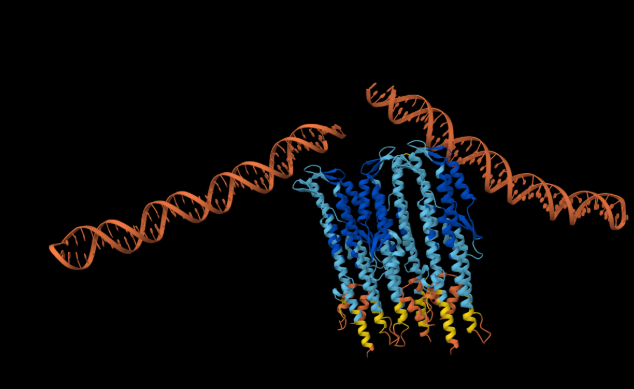 |
|---|
The end result of this process will involve a dsDNA template ready to be isothermally amplified through an RPA protocol. In order to do this, T4 DNA polymerase will ligate the complex.
Recombinase-polymerase amplification
The second step of this diagnostic will involve isothermal amplification of our dsDNA template utilizing RPA for a fast, specific, and lower-cost test. Within the process, a recombinase enzyme, a strand-displacing polymerase, and specific primers will be combined for selective amplification (Lambert iGEM, 2025). For the purposes of this research, we will likely utilize the TwistDx® DNA Amplification Kit Assay Design Manual for RPA for key parameters regarding major RPA processes.
RPA, identified by Lobato & O’Sullivan (2017) as a highly selective technique that is able to amplify ssDNA and dsDNA targets from a “wide variety of organisms and samples”, operates between 37-42°C. We utilized EZassay software to generate optimal forward and reverse primers, which we selected based on dimerization percentages (see Figure 2). From the software, we identified that dimerization percentages of 0-5% were “ideal”, 5-10% were “good”, 10-15% were “acceptable", 15-25% were “risky”, and percentages >30% were “less than ideal”.
| Figure 2. A secondary structure model of our chosen RPA primer, generated using EZassay software. This primer has a dimerization percentage of 20.69% and an amplicon spanning 114 nucleotides. | 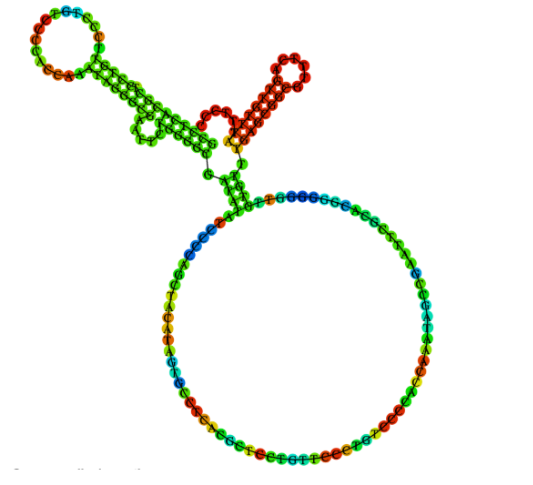 |
|---|
CRISPR-Cas12a detection and lateral flow assay output
The final step of this diagnostic is the creation and visualization of a detectable output utilizing a mixture of CRISPR-Cas12a and a sandwich-style LFA. The Cas12a protein is to be specifically utilized in place of other Cas proteins due to its ability for specific targeting, indiscriminate ssDNA cleavage, and high specificity and sensitivity, resulting in excellent integration with previous workflows (Lambert iGEM, 2025). Cas12a undergoes an activation that not only cleaves the target DNA (cis-cleavage), but also cleaves the fluorosphere-quencher reporter (trans-cleavage), resulting in a measurable result that can be visualized on an LFA (Mustafa & Makhawi, 2021; Lambert iGEM, 2025). Additionally, as BipD is a larger analyte, a sandwich LFA is to be employed (Oldenburg, n.d.). As previously mentioned, a positive or negative result is key in indicating the presence or absence of BipD in the tested individual’s bloodstream. Appropriate CRISPR RNA (crRNA) sequences will ideally be selected through literature, and we likely will utilize a standard 6-carboxyfluorescein (6-FAM) ssDNA Fluorophore-Quencher (FQ) for the system.
Parts level
PDL, RPA, and CRISPR-Cas12a detection processes
The primary objective of this project was to detect and transform a melioidosis biomarker into a quantifiable visual output while subsequently indicating the presence or absence of the disease within the bloodstream of a susceptible individual. In order to improve patient outcomes to detrimental infectious diseases, we—like the LANCET framework—aimed to identify proteins that traditional methods such as Enzyme-Linked Immunosorbent Assay (ELISA) and western blot techniques lacked the sensitivity and specificity to detect (Aydin et al., 2025; Lambert iGEM, 2025).
Furthermore, we will initially promote PDL for specific detection (see Figure 3). After a blood sample has been taken, the selected aptamers AptBipD1 and AptBipD13 will specifically detect and bind to available BipD within the biofluid, bringing the three constructs in proximity and promoting the hybridization of an oligonucleotide bridge. The formed protein-aptamer complex will then be ligated by a T4 DNA polymerase to form a continuous dsDNA product to be amplified with RPA techniques.
| Figure 3. A graphic exhibiting the workflow of our proposed PDL assay. | 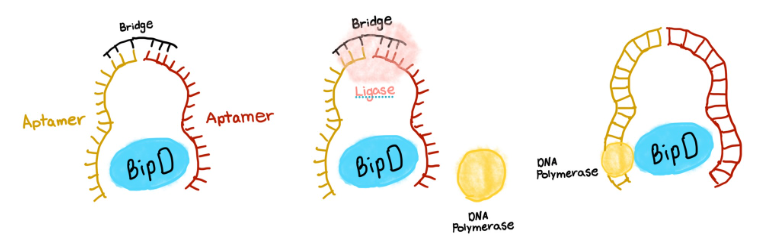 |
|---|
Subsequent amplification will ideally be done isothermally, at a temperature spanning 37-42°C (see Figure 4). We will utilize a selected RPA primer generated from EZassay software, with a forward primer sequence of TTTGGGGTTGTTGTTTGGTTGTGTGTTTG, a backward primer sequence of TCGTGCGAATTCGGCTATTTGGTGGGGAC, and a dimerization percentage ≈ 21%. As RPA—unlike Polymerase Chain Reaction (PCR)—appears more efficient with shorter target constructs, we designed our amplicon to span approximately 114 base pairs (bp).
| Figure 4. A graphic exhibiting the workflow of our proposed RPA protocol. | 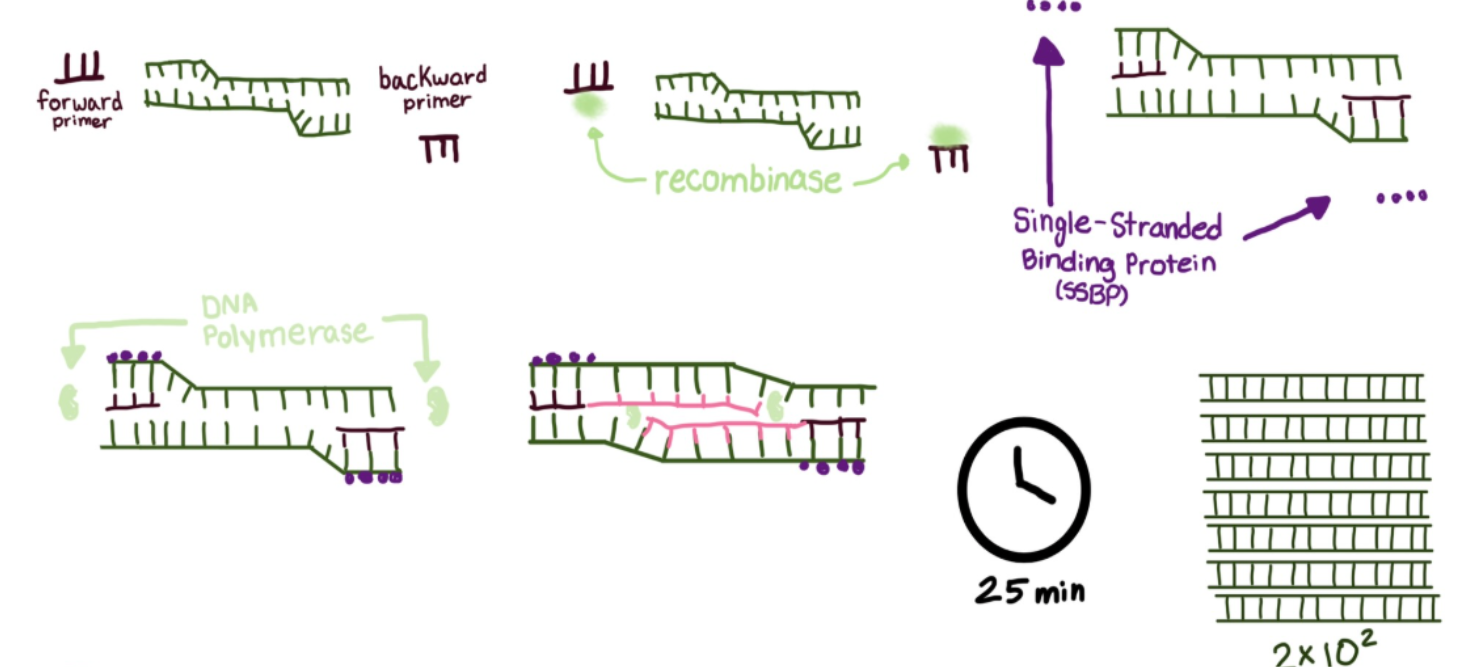 |
|---|
Lastly, CRISPR-Cas12a detection will involve target DNA recognition, subsequent collateral cleavage, and FQ activation to create an identifiable output (see Figure 5). Similar to the LANCET framework, our target construct will be identical to the dsDNA template produced by the previous PDL assay to ensure optimal function (Lambert iGEM, 2025). Following the transformation of the replicated template into a detectable result, a sandwich-style LFA will be utilized. It can be noted that, with this LFA style, the test line intensity will correlate with the amount of analyte present in the sample, potentially indicating disease progression as well (Oldenburg, n.d.).
| Figure 5. A graphic exhibiting our proposed workflow of the CRISPR-Cas12a system. | 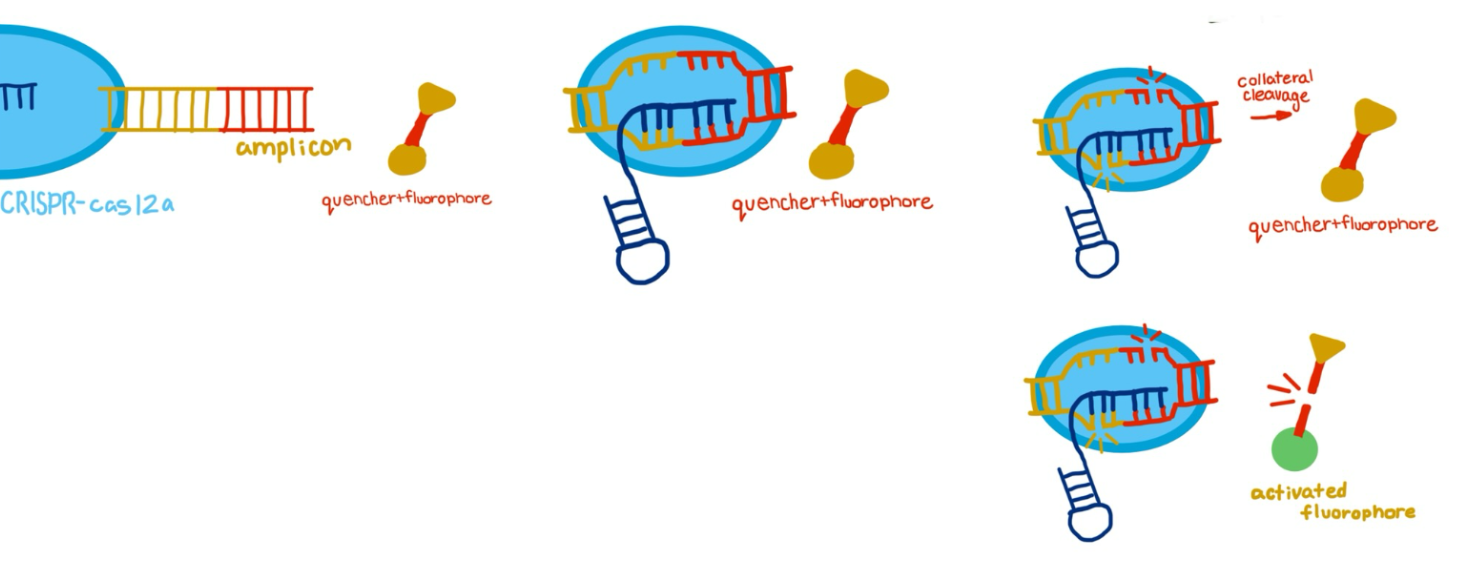 |
|---|
PDL construct design
After eventually selecting AptBipD1 and AptBipD13 through literature analysis and computational validation, we generated forward and backward primers on EZassay software and modeled secondary structures to monitor dimerization rates. We then created a corresponding design that we aim to integrate within our PDL assay, in which we obtained explicit consent from the 2025 Lambert iGEM team to utilize their linker regions, BBa_25SC2X09 and BBa_2537R5AB, in our ssDNA probes (see Figure 6).
| Figure 6. A construct design for our proposed PDL assay. This design involves a constant region and a linker region surrounding each aptamer sequence. AptBipD1 and AptBipD13 are to be specifically utilized within this construct, alongside the 40 bp linker regions BBa_25SC2X09 and BBa_2537R5AB. | 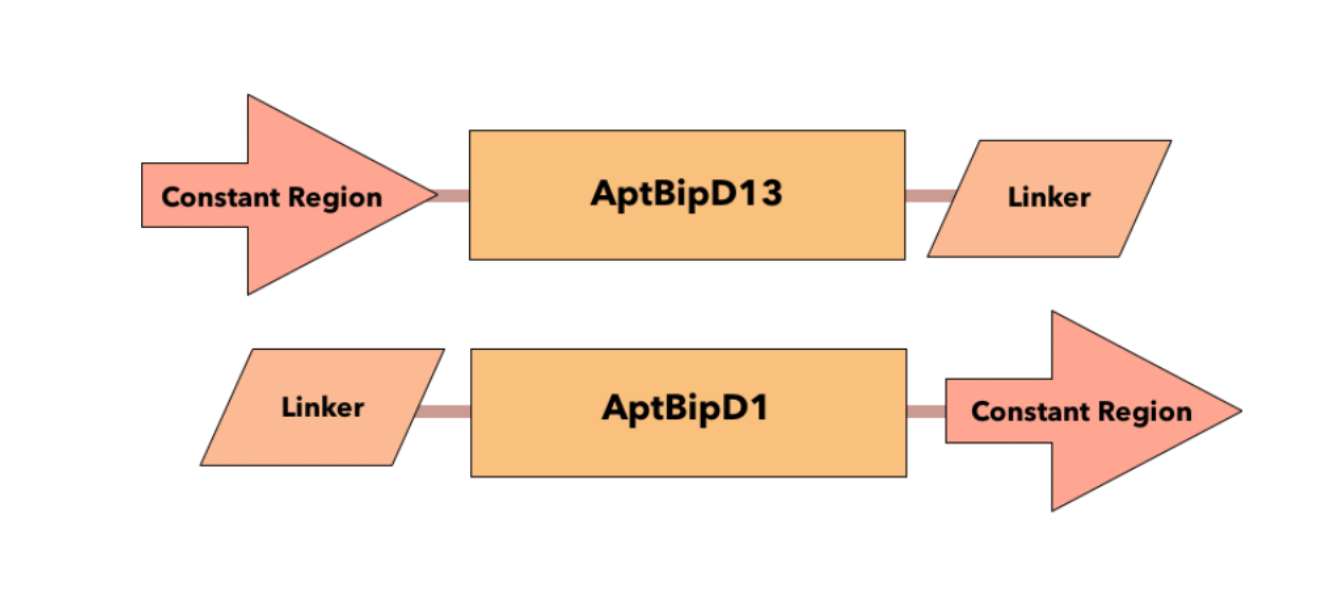 |
|---|
Safety
Due to its prominent characteristic as a highly infectious vector, incorporating a secure and stable system is key when experimenting with B. pseudomallei (Ibrahem et al., 2025). In order to prioritize safety and mitigate risk of undesirable contact, this project will rely on non-infectious components of B. pseudomallei—such as a purified form of its BipD protein rather than a live form—with any necessary pathogen-related work to be conducted in appropriate laboratories following strict biosafety protocols. All laboratory work will take place in biosafety level-1 (BSL-1) or BSL-2 facilities equipped with adequate ventilation, sufficient personalized protective equipment, and functional sanitation facilities. Early-stage development of the system will emphasize in silico modeling and simulation to both reduce laboratory risk and to promote validation prior to in vitro testing.
Additionally, the usage of crucial laboratory equipment such as personalized protective equipment, biosafety cabinets, and properly sterilized instruments will further minimize exposure and risk of contamination when experimenting in vitro. All procedures will adhere to biosafety guidelines set by the Centers for Disease Control and Prevention, appropriate state laws, and general safety knowledge regarding decontamination and post-lab disposal.
Discussions
Our work explores a unique approach to diagnostics by transforming the presence of a crucial virulence protein into a quantifiable molecular signal to be detected through an accessible means. Although the severity of melioidosis can be seen through its staggering death rate of approximately 90% in some regions, research on the disease and its vector has unfortunately not been expanded upon enough to bridge crucial gaps in effective treatment and diagnosis. Our proposed project aims to help bridge critical diagnostic gaps to enable fast and effective treatment. To address these shortcomings, we propose a novel diagnostic designed to overcome the speed, limitations, and inaccessibility of current methods.
First, the proposed PDL assay, adopted from the LANCET framework, exhibits a promising solution by enabling rapid detection of B. pseudomallei. In our modified design, the target protein will be BipD, a B. pseudomallei-associated virulence protein, rather than CspZ. By utilizing BipD and the two ssDNA aptamers AptBipD1 and AptBipD13, the system can produce an amplifiable and quantifiable signal before serious disease progression, which is a key aspect that current melioidosis diagnostics lack.
Moreover, the integration of RPA further promotes the assay’s speed and accuracy, with greater accessibility and affordability than PCR. This is because RPA is isothermal, leading to less energy utilized and therefore to lower-cost products, which proves to be incredibly advantageous in rural clinical settings where early intervention and detection are critical for survival. Conversely, the reliability of aptamer binding must be thoroughly validated, as factors such as environmental conditions and precise technique may affect assay performance (Hammond & Marley, n.d.).
Key limitations within the proposed project include potential aptamer dimerization leading to signal disruption, as well as the unreliability of in silico testing in determining crucial characteristics such as binding. Variability in protein folding and sample composition in real-world settings may further impact binding efficiency. We additionally recognize that crucial processes for this diagnostic—PDL, RPA, LFA, and potentially PCR—may not be as accessible to individuals within melioidosis-prone areas, due to higher chances of resource discrepancies and funding gaps regarding diagnostics and their subsequent processes.
Next steps
To further develop and validate the proposed PDL-based diagnostic system, multiple next steps can be undertaken. A primary objective is the validation of BipD aptamer interaction through a comprehensive rapid review, establishing the foundation required for the diagnostic platform. A subsequent objective is in vitro validation utilizing a similar protocol as the 2025 Lambert iGEM team, in which our PDL assay will be employed and subsequent PCR or quantitative PCR (qPCR) may be facilitated to validate primer efficiency prior to RPA amplification. Amplification success may be assessed using gel electrophoresis to verify assay activity. In parallel, a target-specific design of the CRISPR-Cas12a detection module may be independently developed and tested. This involves designing crRNA sequences complementary to the amplified dsDNA template, followed by an assembly of the Cas12a-crRNA complex. We additionally aim to thoroughly develop, validate, and experimentally modify all additional proposed designs and workflows through hands-on experimentation. We also see that the creation of future diagnostic prototypes may be incredibly helpful in further understanding our design workflows and effectively implementing trial-and-error feedback loops.
Author contributions
AB, GH, AJ, RK, and SL contributed heavily to project ideation and pitching. GH planned and carried out all computational simulations, cited the sources, produced the video, and contributed to the Parts level section. AJ contributed to specific research regarding BipD and B. pseudomallei, as well as graphic creation. SL, RK, TB, and NN contributed to additional background research. SL and AJ contributed to the Background, Discussions, and Safety sections. AB wrote the Systems level, Device level, and Parts level sections, and additionally contributed to all task division and professional communication regarding the project. AB, GH, AJ, and SL took the lead in writing the manuscript. All authors helped shape both the research and the manuscript.
Acknowledgements
We would like to extend our regards to the Lambert iGEM Competition Team for the valuable time, advice, and resources given to us throughout the scope of our project. We are incredibly grateful to Mr. Nick Godzik for his extensive guidance regarding our computational modeling and experimental design process, which was incredibly helpful in the development of our brief. We would also like to thank Mrs. Kate Sharer for the incredible support given to us throughout every step of our design, which proved to be a crucial component in the culmination of this research. Lastly, we would like to express our heartfelt thanks to both BioTreks and the BioBuilder Foundation for the phenomenal feedback, support, resources, and opportunities provided to us throughout the season.
References
Aydin, S., Emre, E., Ugur, K., Aydin, M. A., Sahin, İ., Cinar, V., & Akbulut, T. (2025). An overview of ELISA: A review and update on best laboratory practices for quantifying peptides and proteins in biological fluids. The Journal of International Medical Research, 53(2), 3000605251315913. https://doi.org/10.1177/03000605251315913
Dubey, D. K., Bano, N., Dubey, M., Sangwan, P., Mitra, S. K., Kulshrestha, V., Jain, B., & Mehdi, I. (2023). A case series of melioidosis: An underdiagnosed infection. IDCases, 31, e01685. https://doi.org/10.1016/j.idcr.2023.e01685
Gassiep, I., Wuthiekanun, V., Oakley, T., AuCoin, D., & David, T. (2025). Laboratory diagnosis of melioidosis. PLoS Neglected Tropical Diseases, 19(12), e0013761. https://doi.org/10.1371/journal.pntd.0013761
Hammond, M., Marley, A., & Rosario, M. (n.d.). Key factors known to affect test performance and result interpretation. https://www.easternpathologyalliance.nhs.uk/wp-content/uploads/Key-factors-known-to-affect-test-performance-and-result-interpretation-1.pdf
Kaewrakmuk, J., Chunsri, S., Hortiwakul, T., Kawila, S., Patungkaro, W., Jariyapradub, B., Limvorapan, P., Chiewchanyont, B., Thananchai, H., Duangsonk, K., & Tuanyok, A. (2023, May 20). Under-Reporting Cases and Deaths from Melioidosis: A Retrospective Finding in Songkhla and Phatthalung Province of Southern Thailand, 2014–2020. Tropical Medicine and Infectious Disease, 8(5), 286. https://doi.org/10.3390/tropicalmed8050286
Lambert-GA. (2025). iGEM wiki. https://2025.igem.wiki/lambert-ga/
Lobato, I. M., & O’Sullivan, C. K. (2018). Recombinase polymerase amplification: Basics, applications and recent advances. TrAC Trends in Analytical Chemistry, 98, 19–35. https://doi.org/10.1016/j.trac.2017.10.015
Mustafa, M. I., & Makhawi, A. M. (2021). SHERLOCK and DETECTR: CRISPR-Cas systems as potential rapid diagnostic tools for emerging infectious diseases. Journal of Clinical Microbiology, 59(3), e00745-20. https://doi.org/10.1128/JCM.00745-20.
Nan, D., Mao, X., & Li, Q. (2024). Burkholderia pseudomallei BipD initiates mitophagy to evade killing by hijacking host KLHL9-KLHL13-CUL3 E3 ligase to ubiquitinate IMMT. Autophagy, 20(12), 2830–2832. https://doi.org/10.1080/15548627.2024.2403125
Oldenburg, S. J. (n.d.). Sensitivity of Lateral Flow Diagnostic Assays with Ultra-Bright Gold Nanoshell Reporters. Millipore Sigma. Retrieved April 30, 2026, from https://www.sigmaaldrich.com/US/en/technical-documents/technical-article/clinical-testing-and-diagnostics-manufacturing/ivd-manufacturing/sensitivity-lateral-flow-diagnostic-assays?srsltid=AfmBOop_S4gaaNsHIIU0jO9gaDPWKzBtLw7WqscZ7gULSAHzBprIWRkm
Selvam, K., Khalid, M. F., Mustaffa, K. M. F., Harun, A., & Aziah, I. (2021). BipD of Burkholderia pseudomallei: Structure, functions, and detection methods. Microorganisms, 9(4), 711. https://doi.org/10.3390/microorganisms9040711
Verma, N., Srivastava, A., & Agarwal, V. (2026, June). The immune battle against Burkholderia pseudomallei in melioidosis progression. The Microbe, 11, Article 100721. https://doi.org/10.1016/j.microb.2026.100721
Wee, J., & Wei, G.-W. (2024, August 8). Evaluation of AlphaFold 3’s Protein–Protein Complexes for Predicting Binding Free Energy Changes upon Mutation. Journal of Chemical Information and Modeling, 64(16), 6676-6683. https://doi.org/10.1021/acs.jcim.4c00976